
[6]
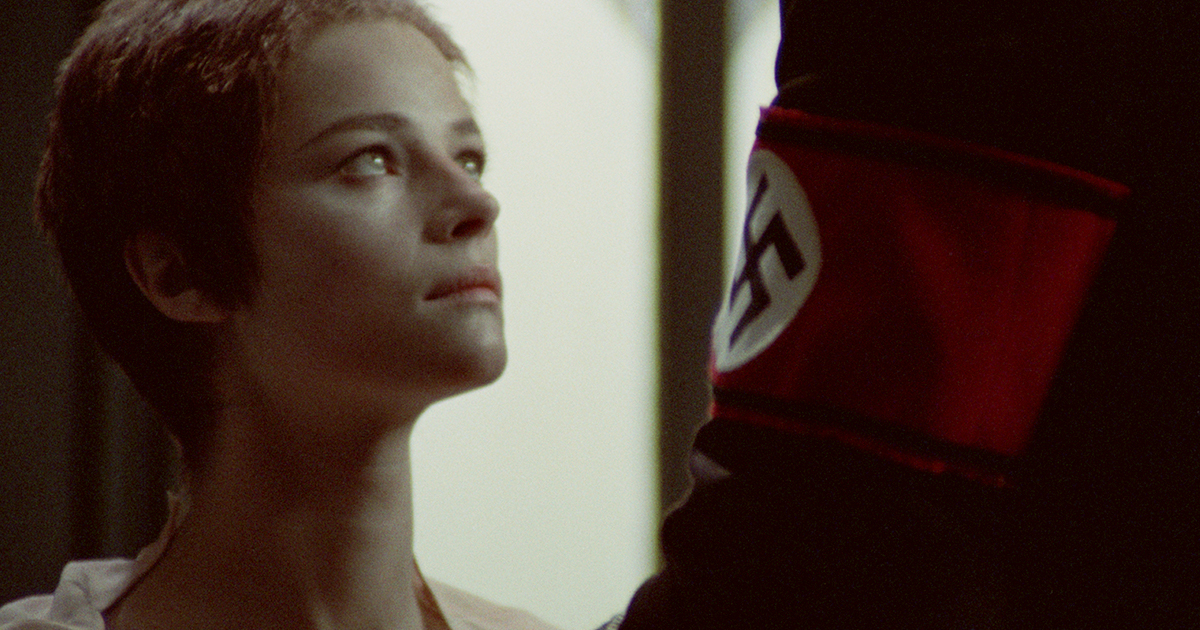
A concentration camp survivor (Charlotte Rampling) rekindles a sado-masochistic relationship with a former SS officer (Dirk Bogarde) in The Night Porter. Thirteen years after the end of World War II, Rampling is married to a renowned music conductor when she spots Bogarde working as the night clerk at a Vienna hotel. Bogarde fears Rampling may drag him out of the shadows by exposing his Nazi past. She tries to avoid him until he forces a confrontation that turns the film on its head with a passionate and disturbing love scene. The back half of the film dwells on their desire to remain together at all costs. Rampling leaves her husband and allows Bogarde to chain her up in his apartment. When his former Nazi colleagues try to root them out, they sequester and starve themselves — fetishizing the Holocaust and the roles they played in it.
The Night Porter is designed to provoke, and provoke it does. I appreciate the first half of the film, as the characters both appear terrified of each other (and the past), building toward that surprising moment when they subvert our expectations. I had hoped the film would continue to surprise me, but the dreary last half of the story doesn’t add much to the experience except to underscore just how disturbing and doomed this relationship is. Director/co-writer Liliana Cavani stages scenes brilliantly, frequently cross-cutting present-day scenes with war-time flashbacks that gain layers of meaning in juxtaposition. The one-sided power dynamic gets less intriguing the more we’re forced to witness it, except in rare, fleeting, non-verbal moments in which Rampling appears to take satisfaction from the way she’s able to torment Bogarde with her body and behavior.
The leading actors give compelling performances, but I dislike the way Rampling’s character development comes to a screeching halt after the midpoint. If she had a more pronounced moment of catharsis — whether breaking free from her lover/tormenter, or painfully resigning herself to him — I might have liked the film more. Instead, she simply becomes a zombie staring off into space whenever she’s not engaged in sexual revelry with Bogarde. It’s too much his story and not enough hers, when hers is the side that begs for understanding. Even though it’s a little too messy and depressing for my taste, it’s hard to dismiss The Night Porter. It’s bold and original, and it gets under your skin. It’s possibly the kind of film I’ll appreciate more on repeat viewings.