
[7]
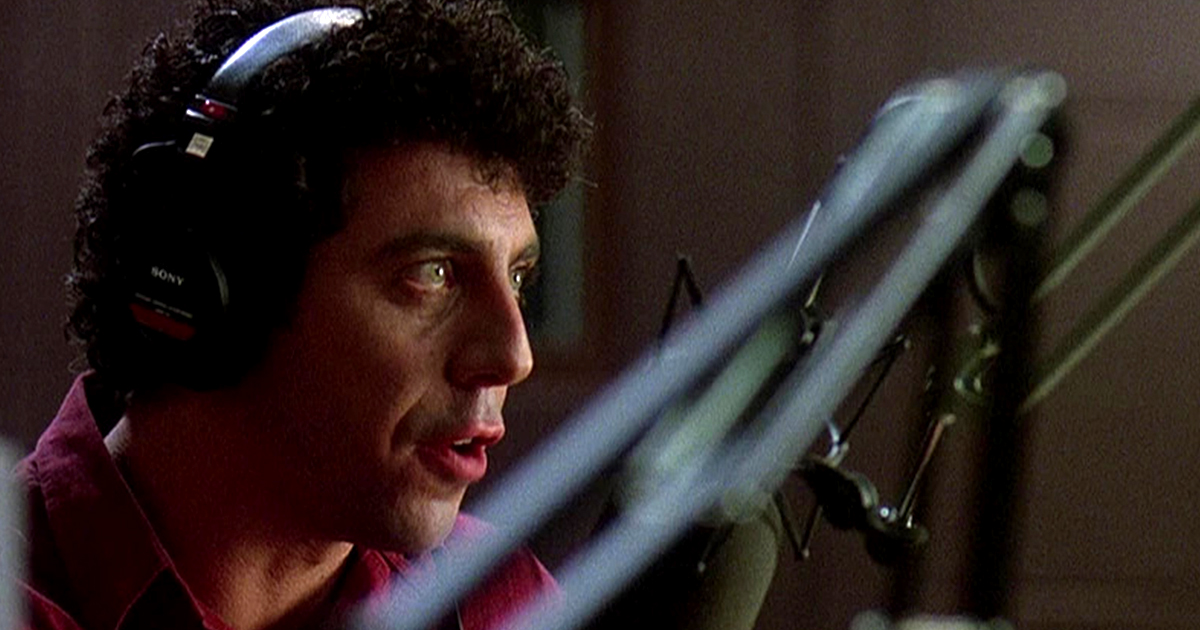
Oliver Stone (Platoon, JFK) directed this underseen and underappreciated stage adaptation about a shock-jock radio deejay (Eric Bogosian) who riles up listeners with his harsh personal criticisms and grim social commentary. Bogosian, who wrote and starred in the one-act play on which the film is based, gives a strong performance as Barry Champlain, a misanthropic provocateur patterned after tabloid media pioneers like Morton Downey Jr or Howard Stern. The film takes place largely over two nights of Champlain’s evening call-in show, with some brief flashbacks that fill in some gaps about Barry’s backstory and relationship with his ex-wife (Little Shop of Horror‘s Ellen Greene).
The callers who spar with Barry during his program represent the dregs of humanity. Many of them are openly hostile, racist, homophobic, or antisemitic. As his show is about ‘go national’, he begins receiving death threats and dangerous packages in the mail. And to be fair, Barry is not a very likable character. He cheats on his loved ones and will trample over anyone to get ahead in his pursuits. But he’s a fascinating character because he nevertheless attracts the attention of society. People love to hear him talk, even if they hate him. They love to bear witness to the breakdown of society because it makes them feel better about their own miserable lives. Talk Radio climaxes with Barry having a nervous breakdown on the air, anxious about resigning himself to a further career stuck with such a soul-sucking audience. But on the other hand, he enjoys being ‘king’ — and in what other kingdom can such a shit-stirrer rule?
In addition to Bogosian’s award-worthy performance, Talk Radio features a solid roster of supporting talent. Greene is very good as the ex-wife who starts taking a renewed interest in Barry after he begs her to pay a visit. The way he treats her dovetails with the film’s climactic call-ins, giving Barry a last chance at redemption before sentencing him to a tragic fate. Alec Baldwin is memorable as the radio station boss who struggles to reign in Barry’s antics for a wider, more commercial audience. The show’s callers are voiced by great character actors like Earl Hindman (Home Improvement), Park Overall (Empty Nest), and Michael Wincott (The Crow), who also appears in the film as an unruly in-studio guest.
The film benefits tremendously from Oliver Stone’s direction. Stone utilizes constant camera movement, glass and reflection, creative lighting and editing, extreme close-ups and other cinematic tricks to transform the play into genuine cinema. The few flashback scenes open the film up a bit, but it might have been nicer to maintain the claustrophobia of the recording studio environment. Even though it rarely leaves that space, Talk Radio always feels alive and with a lot to say. It’s message about the unhealthy relationship between the media and its audience — provocateurs and voyeurs — is still very meaningful.
With John C. McGinley, Leslie Hope, and John Pankow.