
[9]
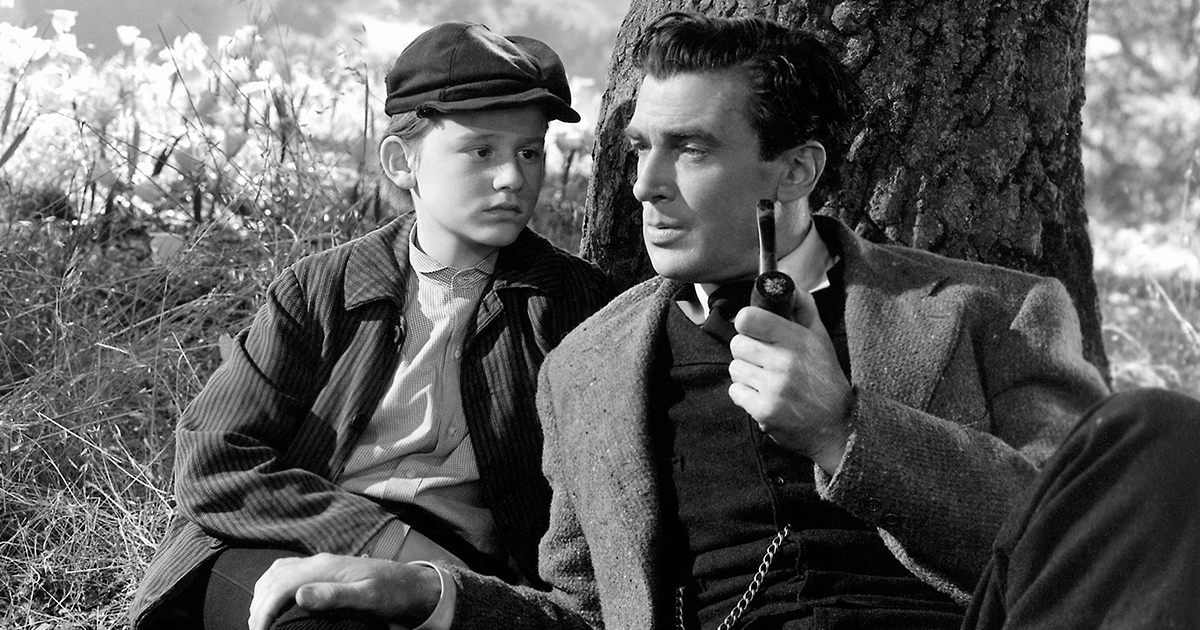
Director John Ford follows up The Grapes of Wrath with another powerfully moving, literary adaptation about working families weathering a crushing economic tide. How Green Was My Valley, based on the novel by Richard Llewellyn, centers around the warm-hearted Morgan family in a small, picturesque coal-mining town in Wales during the late 1800s. The father (Donald Crisp) and his four adult sons all work in the mine, where the cold creep of capitalist greed is leading to wage reductions and layoffs. The family is split on whether unionizing the workers is the moral thing to do. They all secretly hope that their youngest sibling, Huw, played by 12-year-old Roddy McDowall, will get a proper education and find better opportunities in life.
The story is a true ensemble effort, filtered through adult Huw’s remembrances as he looks back at his childhood. Walter Pidgeon gets top billing as the town’s preacher, who wrestles with his love for the Morgans’ eldest daughter (Maureen O’Hara). He doesn’t want her to suffer poverty on his meager income, so their love goes painfully unrequited as she enters a loveless marriage with the mine owner’s son. Anna Lee plays a young woman who marries into the Morgan family and has a baby, only to lose her husband (Patric Knowles) in a mining tragedy. Huw experiences bullying from students and teachers alike, ultimately deciding he wants to follow in his family’s footsteps and work in the mine. He even offers his salary to his widowed sister-in-law.
How Green Was My Valley is essentially a year in the life of this family, a span of time containing births, deaths, marriages, sickness, and as much celebration as sorrow. The characters are salt-of-the-earth and quickly endearing. Any viewer is likely to see themselves or people they know on the screen. The plot is simple and secondary to the characters. The story is propelled by their decisions, reactions, and realizations. The tension comes from wondering how much hardship a family can take before it breaks. The subtext is life-affirming, but more earnest than sentimental, underscoring the dignity of work, the importance of family, and every man or woman’s responsibility to their community. If you’re the least bit patriotic or wistful about simpler times, you might fall under the spell of this film.
Ford makes the picture even more irresistible with its incredible hill-top village location, built especially for the film (in Malibu if you can believe it). Arthur C. Miller’s black & white cinematography is striking, evoking a storybook quality that often underscores Huw’s rose-tinted memories. The performances are uniformly great. Donald Crisp took home an Oscar for playing the Morgan family’s stern but loving patriarch. Sara Allgood was nominated as his plain-spoken wife. Pidgeon and O’Hara make their romance genuinely engrossing, and Roddy McDowall gives a raw, touching performance as Huw. Rhys Williams and Barry Fitzgerald are memorable as two friends of the family who administer comedic payback to Huw’s abusive school teacher.
Academy Awards: Best Picture, Director, Supporting Actor (Donald Crisp), Black & White Cinematography (Arthur C. Miller), Black & White Art Direction,
Oscar Nominations: Best Supporting Actress (Sara Allgood), Screenplay (Philip Dunne), Sound Recording, Film Editing, Score (Alfred Newman)