
[9]
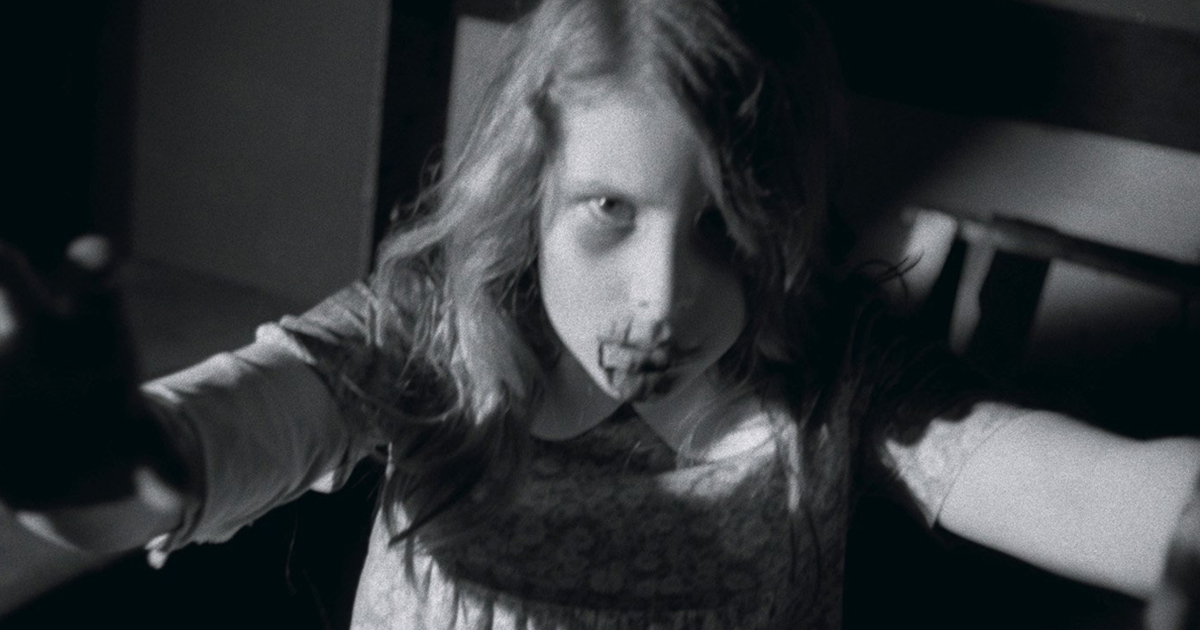
When cosmic radiation transforms the dead into flesh-eating ghouls, a ragtag team of survivors make a last stand at a remote Pennsylvania farmhouse where tensions rise between the living as much as from the growing zombie horde. Co-writer/director George Romero became an inspiration to countless future filmmakers when he made this ultra-low-budget horror film that became a global phenomenon, inventing the modern zombie character and changing the course of horror film history. No indie horror film before Night of the Living Dead pierced the zeitgeist to the extent this one did, paving the way for such future discoveries as The Texas Chain Saw Massacre, The Evil Dead, and The Blair Witch Project.
The magic of this film is in its creative execution and nuanced storytelling. Romero proves a master of scene staging and editing, guiding his cast of local, Pittsburgh-area actors to performances that are more than serviceable. The film invites viewers to experience a zombie apocalypse almost in real time. TV and radio news reports are scattered through the film, helping create a palpable atmosphere and a claustrophobic point-of-view. He also pushes boundaries with some of the earliest graphic depictions of cannibalism and gun violence, riding the wave of late ’60s visceral realism seen in such films as The Wild Bunch and Bonnie and Clyde.
What resonates even more, so many decades after its initial release, is the film’s content and meaning. The gore doesn’t haunt viewers as much as the drama does, whether it’s seeing Judith O’Dea pulled out the house by her own zombie brother, or watching Marilyn Eastman attacked by her own zombie child. For those who love to analyze subtext, Night of the Living Dead is worthy of academic study. While it’s far from direct in its allegory or symbolism, the film captures the social unrest and anxiety of its time — released the year of Martin Luther King’s assassination and in the midst of the Vietnam War. Romero casts a black man, Duane Jones, as the hero of the film, and pits him in heated conflict with a paranoid white character (Karl Hardman). These characters eventually threaten each other’s existence as much as the zombies do. Romero has said Jones’s casting was a color-blind decision without any socio-political intention. It was a bold, striking move either way, making the film’s surprise ending all the more shocking.
As important and inspirational as it is, this is not a perfect film. The acting from a few supporting players is rigid, and O’Dea’s character falls into a helpless, catatonic state for far too long. While Romero works wonders to keep the film interesting and engaging, the first half nevertheless begins to drag while Duane Jones boards up the house. But these relatively minor issues do nothing to tarnish the film’s ‘masterpiece’ status. In fact, they almost make the film that much more special, reminding us that this isn’t a slick, polished studio film, but essentially a home movie made in someone’s back yard — one of the most staggering filmmaking success stories ever told.
Co-written by John Russo. With Keith Wayne, Judith Ridley, and George Kosana.