
[8]
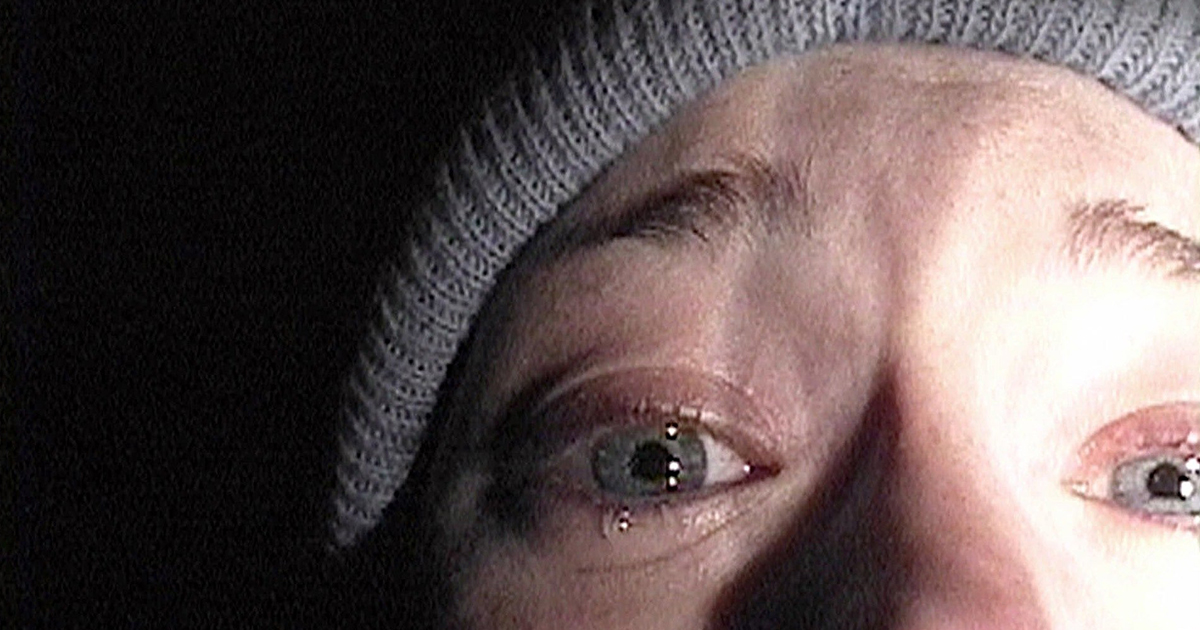
While it wasn’t technically the first ‘found footage’ horror film, The Blair Witch Project gets credit for popularizing the subgenre, capturing the attention of audiences worldwide with its cogent, documentary-style approach to its subject matter. The film appears to be shot by three film school students (Heather Donahue, Michael Williams, and Joshua Leonard) as they travel deep into the Maryland woods to investigate ‘the Blair Witch’, a local legend often attributed to unexplained disappearances and murders over the years. As the students get lost in the woods, they soon discover mysterious stick figures, piles of rocks, and slime — signs that the Blair Witch may be very real indeed. The film culminates in a showdown from which none of the characters return. All that would be found is their film footage, the very film we are watching.
Young people watching The Blair Witch Project today will probably feel underwhelmed by its deliberate pacing and lack of any special effects, gore or jump scares. But those of us who saw the film when it was released in the late ’90s will remember how truly original, inspired, and effective this film was, and still is, especially in contrast to the swath of formulaic teen horror flicks that littered multiplexes in the late ’90s. The Blair Witch Project still feels real and still makes me look over my shoulder when I watch it alone at night.
Donahue, Williams, and Leonard give remarkable, underrated performances as their characters become psychologically frayed, turning against each other in fear and desperation. Co-directors Daniel Myrick and Eduardo Sanchez, who also co-wrote the film with Donahue, exercise remarkable restraint to keep the film believable at all times. They avoid jump scares, flashy gore, fancy sound design or scoring, and even an unambiguous ending because they know those are recognizable film tropes that would disrupt their illusion of palpable realism. Most other found footage flicks released in this film’s wake (even good ones like Cloverfield and Exists) struggle to justify how all the story’s dramatic events are so conveniently captured by a handheld camera operator. Some suspension of disbelief is always required. But not with The Blair Witch Project. Donahue’s obsession with bringing home a compelling documentary is all the justification we need, as well as the crux of her tragic character arc.
The Blair Witch Project may not satisfy some fans of traditional, narrative horror films. It plays with form and function enough that it really can’t be judged by the same criteria. It’s something different and historic, so unique in its conception and execution that its success can never (and has never) been repeated.