
[7]
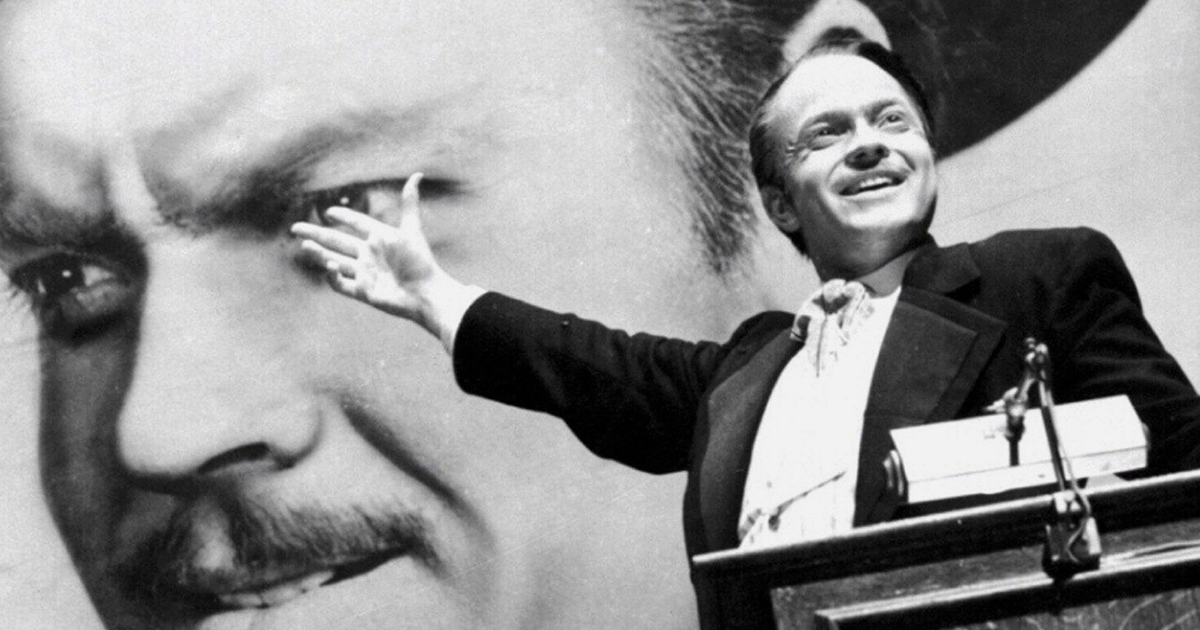
When the sixth-richest man in the world dies in solitude at his palatial estate, reporters scramble to uncover the meaning behind his dying word: “Rosebud”. Through a series of interviews with his business partners and estranged wives, a portrait of Charles Foster Kane (Orson Welles) comes into focus. When Kane was just a boy, his parents struck oil and signed guardianship of the boy over to a banker who would ensure he received a good education. Instead, Kane flunked out of multiple schools, nevertheless entering into the newspaper business and running for public office. But all of these endeavors, including his marriages, are destined to blow up in Kane’s face.
The reporters in Citizen Kane never learn who or what “Rosebud” is, but director/co-writer Welles ends the film by allowing the audience in on the secret. It’s one of the all-time great movie endings, the kind that makes you reconsider everything that came before it. Ultimately, Citizen Kane warns that money can’t buy love or happiness, but it also relies on some shaky suppositions — namely that an unloved child is doomed to inevitable failure in life, regardless of whatever riches he may acquire. I don’t believe this is always true. I believe we can control our destinies by effort of will and by learning from our mistakes. Charles Foster Kane chooses not to. Instead, he chooses to be a supreme asshole to all those around him.
Even though Citizen Kane is arguably the most critically acclaimed film ever made, I don’t treasure it the way so many other film lovers do. I certainly appreciate Gregg Toland’s masterful cinematography, the production design, and the terrific score by Bernard Herrmann. The acting is uniformly great, and the screenplay is inspired in its structure and design. And Welles’s direction shows elegance and sophistication far beyond what we see in other directorial debuts. Don’t get me wrong: the film’s cleverness and craftsmanship are well worth repeat viewings. I just can’t get over what an asshole Kane is.
I adore other films about unlikable maniacs — films like Gorillas in the Mist or The Mosquito Coast — but in those other films, I understand the characters’ obsessions. I don’t understand Charles Foster Kane. I think we’re supposed to feel sorry for him, recognizing that all his entrepreneurial and romantic effort boils down to his search for love and approval. We’re supposed to feel that since he was never loved, he’s thus incapable of truly loving anyone else. Since this notion doesn’t resonate with me, the character and the film leave me somewhat cold. As cool as that final revelation of “Rosebud” may be, it’s simply no excuse for being an asshole.
Citizen Kane holds a special part in many aspiring filmmakers’ hearts. Orson Welles was only twenty-five years old when he made the film, helping to ignite filmdom’s perpetual fascination with wunderkind auteurs. The film also has a pretty interesting backstory, chronicled in films such as RKO 281 and Mank. The story is loosely inspired by the life of real-life newspaper tycoon William Randolph Hearst, who tried to prevent the film from being released. According to rumor, “Rosebud” was Hearst’s nickname for his mistress’s clitoris.
With Joseph Cotten, Dorothy Comingore, Agnes Moorehead, Ruth Warrick, and Everett Sloane.
Academy Award: Best Original Screenplay (Herman J. Mankiewicz, Orson Welles)
Oscar Nominations: Best Picture, Director, Actor (Orson Welles), Black & White Cinematography, Black & White Art Direction, Sound Recording, Film Editing, Score (Bernard Herrmann)