[9]
Nightbreed is a bad movie. But it’s also one of my favorite movies. Allow me to explain.
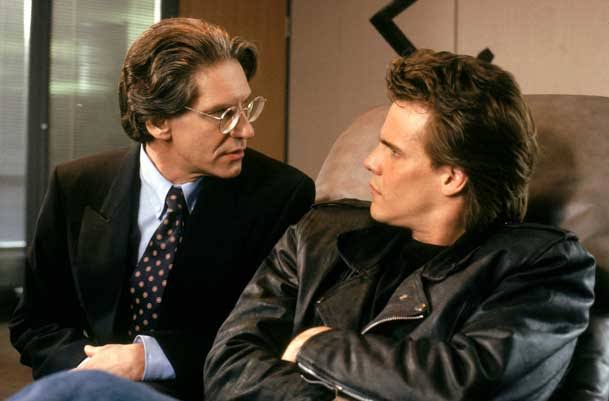
The film, directed by Clive Barker and based on his book Cabal, wants to be a sprawling horror-fantasy epic for the ages. The complicated plot concerns a troubled young man named Boone (Craig Sheffer) who’s seeing a psychiatrist named Decker (played by director David Cronenberg). Decker convinces Boone that he’s committed a string of murders during his occasional ‘black-outs’, which are really induced by the pills Decker prescribes Boone. Decker is the real killer, and he’s pinning his crimes on his innocent patient. At the same time this is going on, Boone is also having dreams about monsters frolicking in a cemetery — enticing him to join them. During a hospital stay, another patient named Narcisse (Hugh Ross) tells Boone about Midian, a place beneath a remote cemetery ‘where the monsters live’. Boone decides to seek out Midian, but he’s pursued by Decker and the police, who gun him down right outside the cemetery gates.
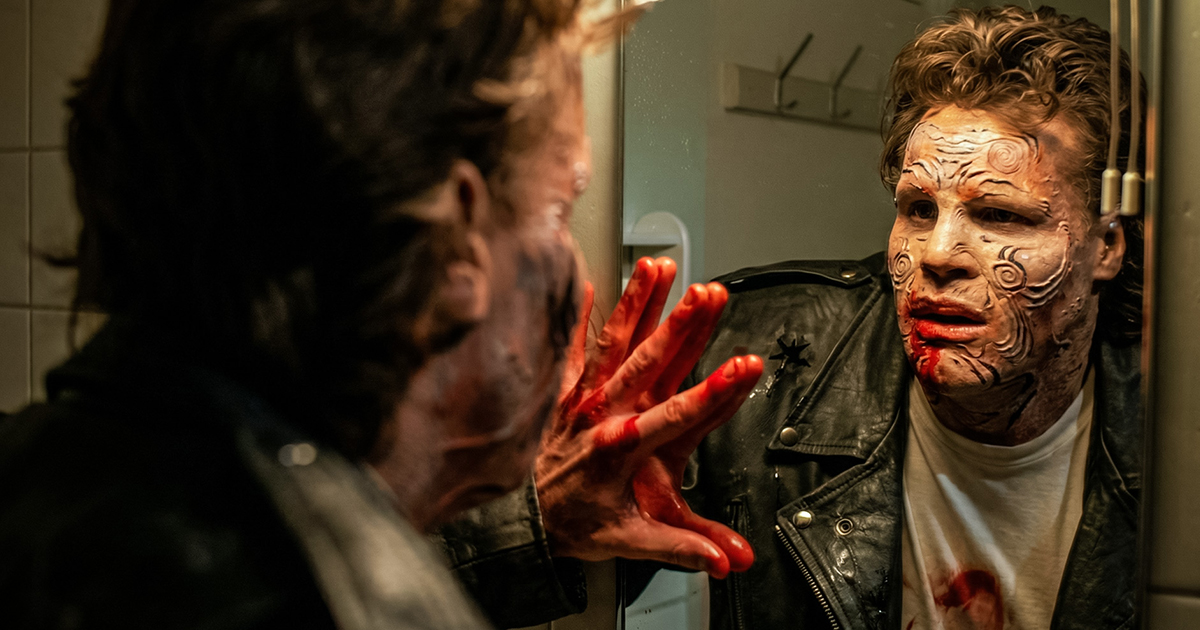
One of the many things that makes Nightbreed interesting is that it’s not just Boone’s story. It’s also the story of Lori (Anne Bobby), Boone’s girlfriend. After she learns Boone has been killed, she decides to check out the cemetery where he died. She discovers that Boone was bitten by one of Midian’s monster’s prior to his death, making him immortal. He was resurrected right off the morgue slab, and is now a citizen of Midian — a member of the tribal Nightbreed, supernatural monsters that have been driven to the point of extinction. Lori loves Boone to much to give him up to Midian, though, so she tries to convince him to leave with her.
At first glance, one might assume the monsters in Nightbreed are the bad guys. While some of them are ugly and frightening, they’re actually the protagonists of the film. The real bad guys are everyone else. Decker, the masked serial slasher who wants to wipe out the Nightbreed, persuades local police, led by Captain Eigerman (Charles Haid), to launch an attack on Midian. For safe measure, Eigerman brings an alcoholic priest named Ashberry (Malcolm Smith) on the mission. Eigerman is a power-mad fascist, through and through. Ashberry is initially sympathetic toward the Nightbreed, but when their god Baphomet rejects him, his heart turns to darkness.
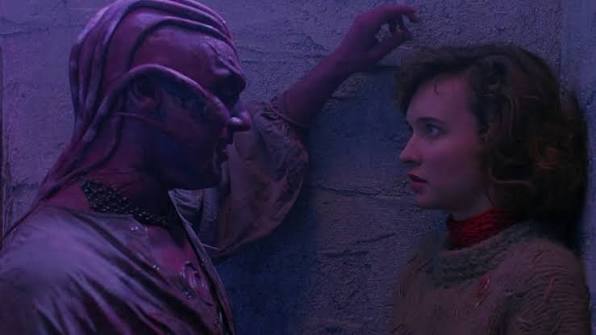
As this grand battle between men and monsters sets up and plays out, Boone shares his new, monstrous alter ego with Lori. Lucky for him, she’s attracted to monsters. In the director’s cut of the film (more about it later), she sings a cover of the song ‘Johnny Get Angry,’ which includes some foreshadowing lyrics: “I want a brave man. I want a cave man.” Boone also learns that he is part of Nightbreed prophecy — that Midian is destined for ruin, and that he is the one who will find the Nightbreed a new home after the fall.
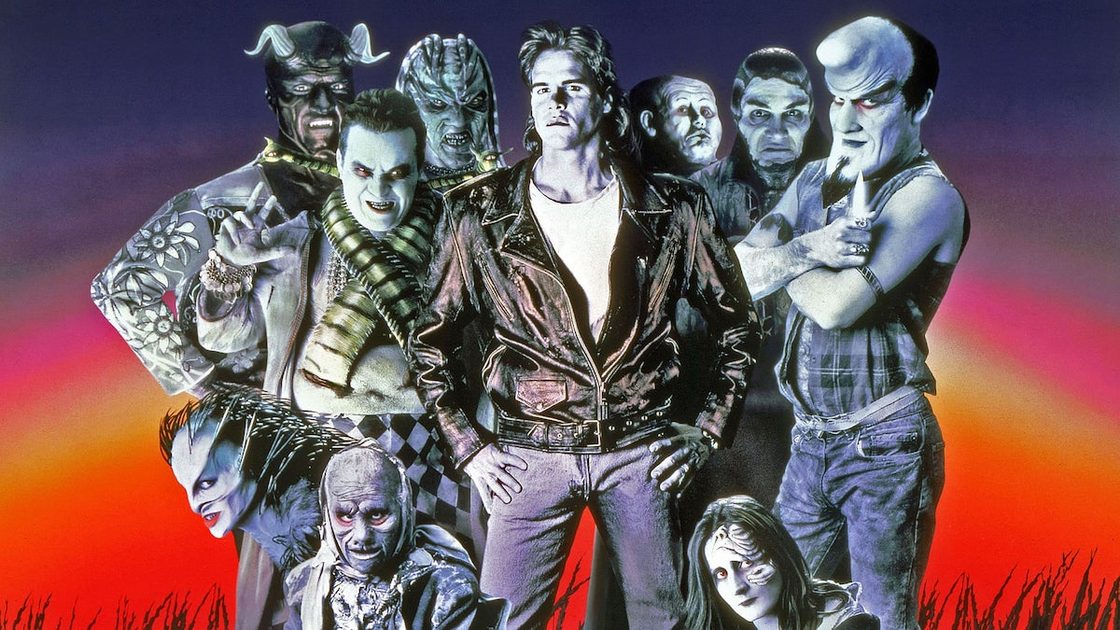
So Nightbreed has a lot — an awful lot — going on. It’s too much for a single feature film to adequately cover, and frankly, it proved to be a far too ambitious film for Barker to control. Barker assembles a pretty good cast and the film has a lot of aesthetic merit, including one of Danny Elfman’s most distinctive scores, and a bevy of interesting creature designs. (According to urban legend, the film holds the record for the most actors in prosthetic makeup at one time.) But the film, in either its theatrical version or longer ‘director’s cut’, is an editorial nightmare. The first half-hour is disorienting and confusing. The plot and character development is extremely clunky. We don’t get to know Boone and Lori well enough to invest in their adventures, nor do we get to know any of the Nightbreed as well as we should. The action scenes are poorly staged. The final battle cuts back and forth among several characters so rapidly, that no single confrontation has a chance to properly build or pay off. Boone and Lori’s story gets so lost in the shuffle, particularly in the theatrical cut, that by the time the film ends, it almost feels like an entirely different movie.
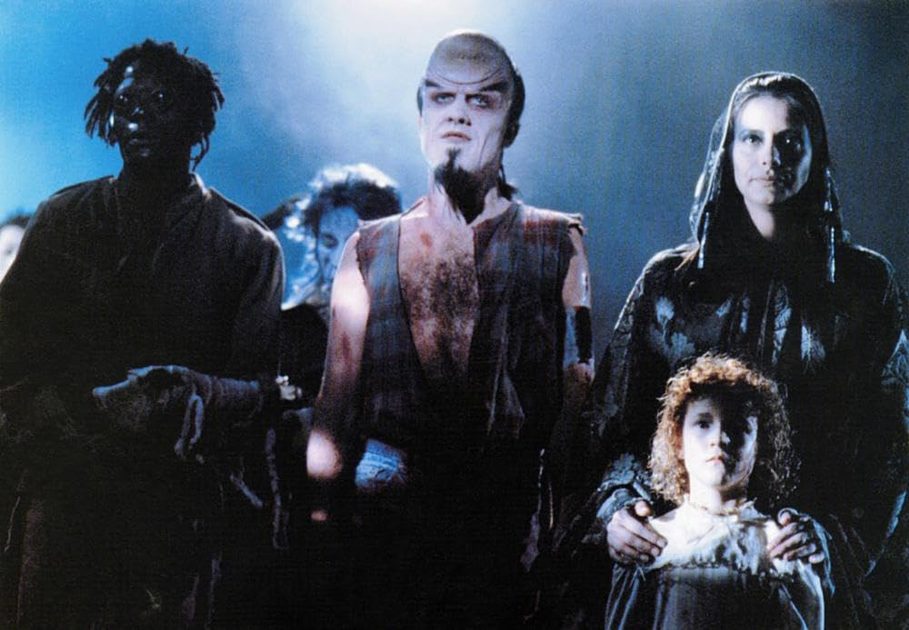
I’ve never given a movie with this many problems a 9 out of 10 before. But I can’t hide the truth. I love this movie. I’ve seen it dozens of times now. It never gets any better, but my love for it never wanes. Its story, characters, and underlying themes about tribalism, discrimination, and surrogate family speak to me on some deep, profound level — enough that I can simply overlook its myriad, considerable flaws. I’m very drawn to stories like X-Men, stories about the outcasts taking care of their own, or about heroes with secrets so dark, they fear ever sharing the truth for fear of being shunned. When I first saw Nightbreed in high school, I related with Boone. I didn’t know I was gay at that time, but Nightbreed apparently did. A few years later, Clive Barker publicly came out of the closet shortly after I did, which only deepened my strange bond with this movie. Barker has since referred to Nightbreed as a confession of his homosexuality.
Regarding the two different cuts of the film, I find the shorter, original theatrical cut to be a more polished and overall enjoyable experience. The longer ‘director’s cut’ chops up and recycles Danny Elfman’s score to a degree that a really bugs me. A lot of the new dialogue is less than pristine in audio quality, too. But it does reinstate a number of scenes that give the main characters more time to live and breathe before the plot whisks them away from each other. It also features a much better alternate ending that refocuses the story back on Boone and Lori in an emotionally satisfying way. All in all, the director’s cut gains twenty minutes in its run time, and nearly another twenty in alternate footage. The fact that a new cut and extensive restoration of the film exists all these decades after the film’s initial release is comforting — now I know I’m not the only one who’s overtly fond of this weird, imperfect movie.
As messy as the end result is, Nightbreed‘s ambition and intention win out over its wobbly execution. When I watch Nightbreed, I fill in all the missing gaps with my imagination. I fix its problems in my head. I see it more for what it wants to be, rather than what it is. It may be that if you want to love Nightbreed, you’ll find your way to it.
With Hugh Quarshie, Doug Bradley, Catherine Chevalier, Oliver Parker, and Christine McCorkindale.