Waterloo Bridge (1931)

Waterloo Bridge (1931)

[7]

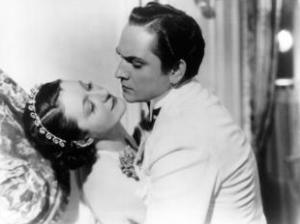
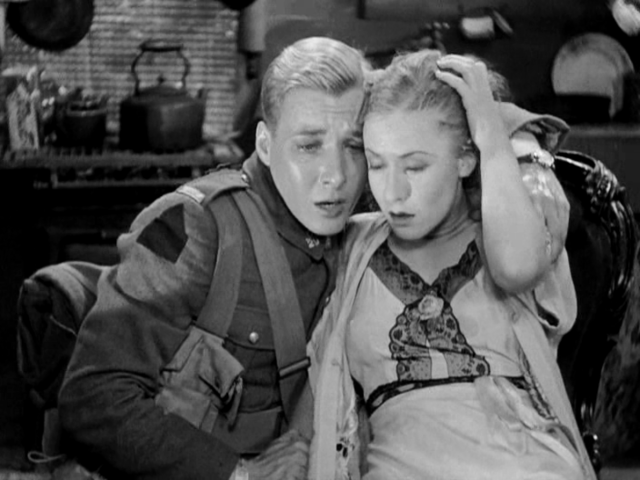
This is the first of at least three film versions of Robert L. Sherwood’s play about an American soldier who falls in love with a Londoner during a World War I air raid, unaware that she is a prostitute. Director James Whale (Frankenstein, The Invisible Man) delivers a solid melodrama with two great lead performers. I was particularly taken with Kent Douglass as Roy. At times, he seemed to display the kind of naturalistic acting style that wouldn’t become popularized until Brando hit the scene decades later. I totally bought Roy’s doe-eyed infatuation with Myra (Mae Clarke), hook, line and sinker. Clark is good with the tremendous amount of pathos the screenplay gives her to work with.
The Hunchback of Notre Dame (1939)

The Hunchback of Notre Dame (1939)

[6]

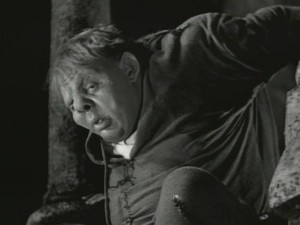
Charles Laughton’s performance as Quasimodo is the main reason to see this movie. Laughton gives the deformed bell ringer moments of quiet torment as well as unbridled joy, and without ever going over the top – a remarkable feat that should have earned him an Oscar nomination. I also liked Cedric Hardwicke as the malevolent Frollo and Maureen O’Hara (in her screen debut) as Esmerelda, but several of the other cast members act as though they are playing cartoon characters (Harry Davenport is the worst offender). The film could have benefited from a more genuine period setting and a more earnest supporting cast. Director William Dieterle bestows the film with some elegance, though it’s not nearly as polished as his later work on The Devil and Daniel Webster.

Swing Time (1936)

Swing Time (1936)

[6]

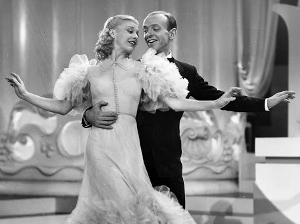
Fred Astaire and Ginger Rogers, filmdom’s undisputed dancing duo, are at their apex in Swing Time, directed by George Stevens (is there any genre that man didn’t tackle?) I’m not a fan of old song and dance flicks, but Swing Time is cute enough. The dancing sections are consistently entertaining and technically innovative. My favorite number is one where Astaire dances with three shadows of himself. They’re in synch for a while, and then start competing with each other. Unfortunately, Fred’s in black face for the whole number, but you’ll have that in films from the 30s and 40s.

Holiday (1938)

Holiday (1938)

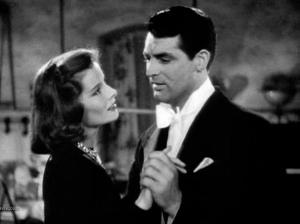
[8] George Cukor directs from the play by Philip Barry (The Philadelphia Story), giving Katharine Hepburn and Cary Grant a chance to shine in this screwball romance. There's not a Hepburn/Grant pairing I don't like, and this one comes with a great…
Death Takes a Holiday (1934)

Death Takes a Holiday (1934)

[5] I love the concept, but Death Takes a Holiday has a hard time overcoming the theatricality of its source material, a stage play by Alberto Casella. The sets are extravagant and the visual effects used to depict Death are remarkable for…
Grand Hotel (1932)

Grand Hotel (1932)

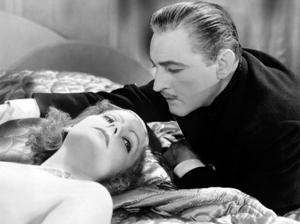
[6] The lives of tenants at a Berlin hotel interconnect over the course of one day in Grand Hotel, based on the novel by Vicki Baum and produced by the famed Irving Thalberg. With Greta Garbo, Joan Crawford, Jean Hersholt, Wallace Beery,…
Make Way for Tomorrow (1937)

Make Way for Tomorrow (1937)

[8]

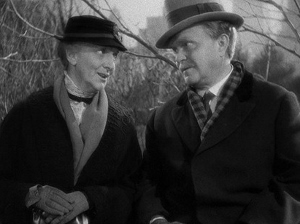
Leo McCarey won the best director Oscar for The Awful Truth, released the same year, but told the Academy they’d awarded him for the wrong picture. He may be right. Make Way for Tomorrow is a disarming, bonafide love story between an elderly couple (Victor Moore and Beulah Bondi) who are forced to separate when the bank forecloses on their home. The film is remarkably restrained and unsentimental for its time. The characters constantly mask their true feelings, fending off melodrama by acting against our immediate expectations.

Christopher Strong (1933)

Christopher Strong (1933)

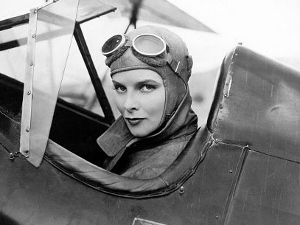
[6] Katharine Hepburn plays a daring aviator, her first starring role, in Christopher Strong. You can see a lot of the attitude and behavior that would later define her career in this early talkie. But the film, directed by Dorothy Arzner, is…
The Most Dangerous Game (1932)

The Most Dangerous Game (1932)

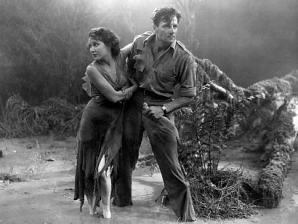
[7] An eccentric recluse hunts shipwrecked humans on a remote jungle island in The Most Dangerous Game, one of the earliest successful 'talkies'. The film's creative team (including producer Willis O'Brien and director Ernest B. Schoedsack) would next bring us King Kong,…
Ninotchka (1939)

Ninotchka (1939)

[7]

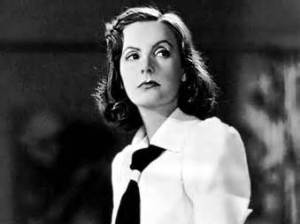
It’s fun to watch Greta Garbo defrost in Ninotchka.  She plays an oh-so-serious Russian sent to Paris to straighten out the sale of some allegedly stolen jewels. Melvyn Douglas gets in her way. At first, he’s an annoyance, but a curious one. Her no-nonsense attitude toward him makes for a unlikely cinematic romance. The highlight of their courtship is a restaurant scene where Douglas is determined to make Garbo laugh. He tells joke after joke to no affect. Then Douglas leans back too far in his chair and falls on his ass. This results in one of the most joyous reaction shots from the Golden Age of Cinema.