
[5]
This early Alfred Hitchcock movie certainly lives up to the latter half of its title. Henry Kendall and Joan Barry play Fred and Emily Hill, a bored suburban couple from London who are thrilled to receive an inheritance that allows them to travel the world. But during their many months at sea, Fred and Emily drift apart. Emily falls in love with a dapper, older gentleman named Commander Gordon (Percy Marmont), while Fred falls into the web of a flirtatious German princess (Betty Amann). When these extra-marital affairs fizzle out, Fred and Emily return to one another in embarrassment and catch a boat home. But a shipwreck in the middle of the night threatens to bring an end to their journeys — and meaning to their lives.
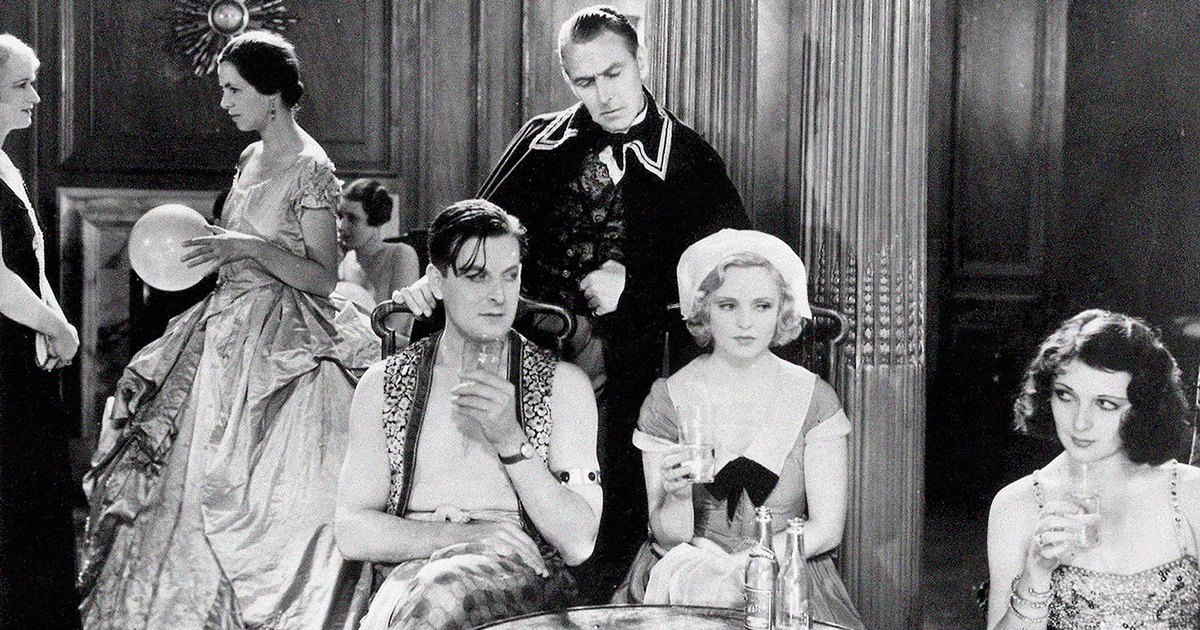
Rich and Strange is the breeziest, most loosely plotted of Hitchcock’s early filmography — almost to its detriment. There are some great comedy moments sprinkled throughout the first half of the movie, like when Fred and Emily stumble back to their ship’s cabin after getting drunk, but the time-consuming storylines involving the affairs with Marmont and Amann’s characters are dull. The film picks up in the second half with the surprising shipwreck and our leading couple’s reconciliation.
The film suffers from its episodic nature. The photography and editing aren’t as refined as previous Hitchcock films, either. But the biggest thing holding Rich and Strange back is the underwhelming casting of the two lead roles, something to which Hitchcock has admitted. Henry Kendall and Joan Barry aren’t charismatic enough to carry such a character-focused story. They appear to be simply ‘going through the motions’, failing to engage us in Fred and Emily’s internal lives. Stronger, more indelible performances could have brought this film into focus faster and more impactfully.
Rich and Strange is such an unusual, contemplative film that I might enjoy it more on repeat viewings. It’s not as inventive as other Hitchcock offerings, though the first five minutes are remarkable. Hitchcock paints a picture of Fred’s hum-drum life through a wordless, well-choreographed montage. Hitch’s pitch black humor provides perhaps the film’s most memorable moment. When a famished Fred and Emily dig into a meal provided by Chinese boatmen, they savor every juicy morsel — until they see the boatmen nail a cat’s skin to the cabin wall.
Based on a book by Dale Collins, who was friends with Alfred and Alma Hitchcock, by whom many believe Fred and Emily to be inspired. With Elsie Randolph.
NOTE: This film was also released under the title East of Shanghai.