
[8]
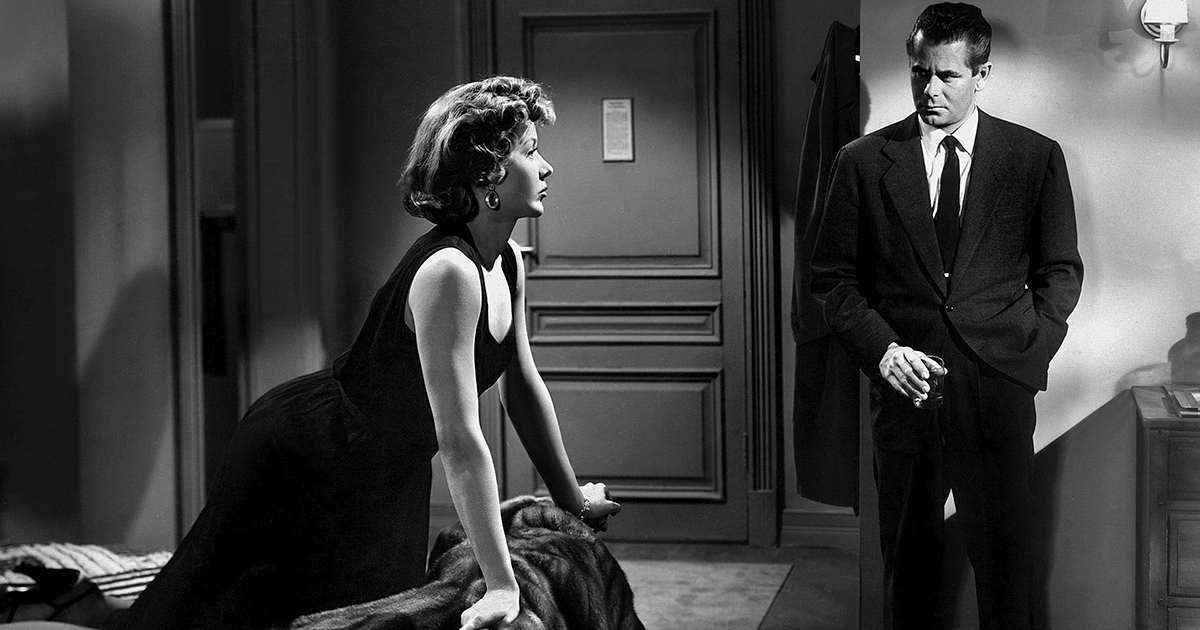
In this disturbing film noir piece from director Fritz Lang (Metropolis, Fury), Glenn Ford plays a police detective who uncovers a crime syndicate involving the police department and the district attorney. After investigating the unlikely suicide of a fellow officer, Ford starts asking questions and his informants begin dying. When a car bomb meant for him instead claims the life of his wife (Jocelyn Brando), Ford snaps. With the help of one gangster’s spurned girlfriend (Gloria Grahame), he goes vigilante, determined to bring justice to everyone involved with his wife’s murder, even as the gangsters threaten to kidnap his young daughter.
A lot of film noir titles feel too calculated and emotionally reserved for my taste, but The Big Heat is my kind of noir. The characters are strongly defined and engaging, and the stakes are personal. The film spends considerable time endearing us to Brando (Marlon’s real life sister) before killing off her character in a sudden, shocking way. Once Ford’s gloves are off, The Big Heat becomes a juicy revenge piece. Ford gives a well-measured performance, vulnerable when his job imposes upon his home life, and chilling when he later commits to vengeance. Lee Marvin is monstrous as Grahame’s abusive boyfriend. When he learns she’s spoken with Ford, he throws scalding coffee at her, permanently scarring her face. Grahame, an Oscar winner for the previous year’s The Bad and the Beautiful, is mesmerizing. She’s a young woman who dances to a strange, singular beat. She maintains a beguiling sense of humor, even after her disfigurement, and gets to do some surprising things in the film’s final act. It’s a terrific performance and one of noir’s great female roles.
Lang’s direction is, as always, confident and polished. One of his biggest achievements here is pulling off such a seedy, violent tale while meeting stringent 1950s censorship standards. Most of the violence is therefore off-screen, but even more effective than it would have been otherwise. When Brando dies, we see the bright light through her daughter’s bedroom window, where Glenn is reading her a bedtime story. And when Grahame is burned by Marvin, we’re watching his fellow gangsters in the adjoining room, wondering if their bad behavior has finally gone too far.
The ending isn’t quite as satisfying as the lead-up, but The Big Heat is a very entertaining crime drama that shocked me a few times. It’s ripe with subtext about toxic masculinity and how women bear the brunt of men’s violence. Parallels can be drawn between the clearly toxic villains and Ford’s hero character, who struggles at times to suppress his rage. It’s a morally murky film, which may leave some viewers cold, but hey — isn’t that what film noir’s for?
With stark cinematography by Charles Lang (The Ghost and Mrs. Muir), sharp dialogue from screenwriter Sydney Boehm (The Atomic City), and many other fine performances, including Jeanette Nolan as a nasty widow who conspires with the bad guys.