
[6]
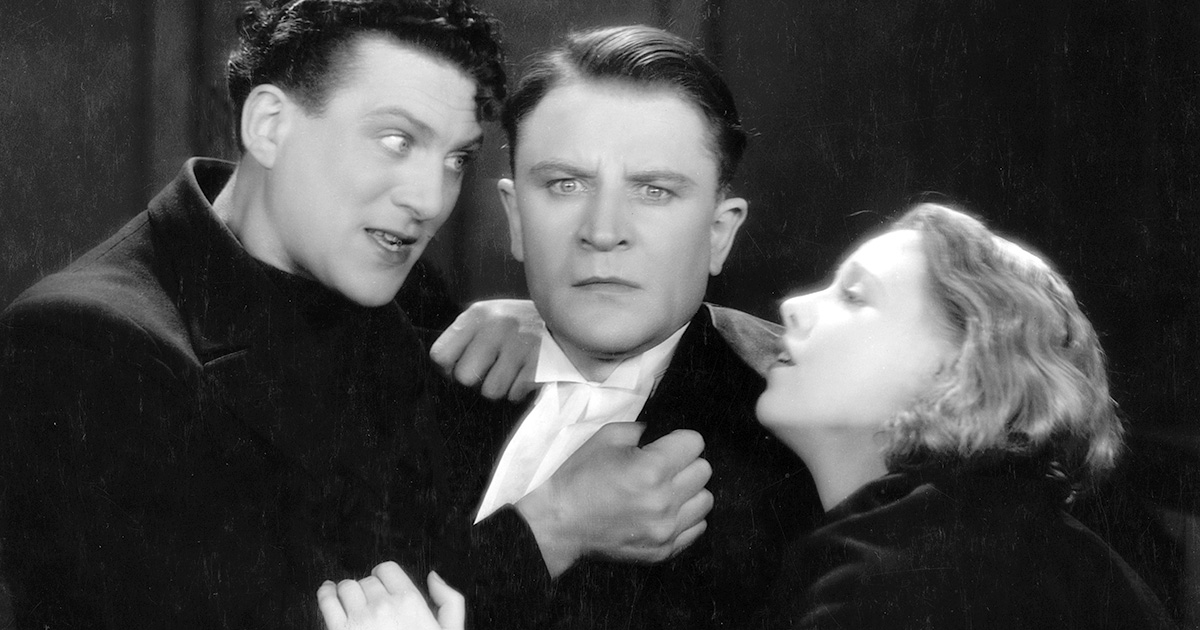
Alfred Hitchcock’s last silent film centers on an Irish love triangle between a lawyer (Malcolm Keen), a fisherman (The Ring‘s Carl Brisson), and a barkeep’s daughter (Anny Ondra) who all live on the Isle of Man. Brisson’s character confesses his love to Ondra’s, but her father (Randle Ayrton) forbids her to marry a poor man. So Brisson leaves to make a fortune abroad, leaving his best friend, Keen, to look after Ondra, who has promised to wait for him. In his absence, Ondra and Keen fall deeply in love. They’re relieved to learn of Brisson’s death — then horrified to learn it was reported in error. When Brisson returns home, the lovers agree to keep their affair a secret. Ondra marries Brisson and Keen goes on to become the community’s head judge. But when Ondra announces she’s pregnant and leaves Brisson, their three-way relationship becomes the town scandal.
Even though The Maxman isn’t a thriller like many of Hitchcock’s more famous works, the director does manage to create emotional suspense with the film. The characters keep secrets until they can’t stand it anymore. At a certain point, you know the truth will come out and people will be hurt in the aftermath. The final act includes a suicide attempt and a climactic courtroom scene in which the dramatic tension finally snaps.
The Manxman, based on a popular novel by Hall Caine, is perhaps the most serious of Hitchcock’s silent films and remarkably character-driven. The three leading characters are far more engaging and sympathetic than those in The Ring‘s sordid love triangle. Brisson over-acts, but it’s easy to relate with his dilemma. I mean, who wouldn’t pity a man shocked to learn his baby isn’t really his, and his wife is leaving him for his best friend? Ondra is very good as a woman driven mad by soul-crushing secrets, and Keen is admirably restrained, adopting a more subtle, progressive style of acting. Since the film is entirely about these three characters, the cast deserves a lot of credit for the film working as well as it does.
Hitchcock helps his actors out by implementing a great many point-of-view shots whenever the characters are engaged in conversation. As a result, the actors are communicating their feeling straight into the lens and directly to the audience — something we rarely see in cinema these days, but a technique that certainly has its own, unique impact. The coastal village setting is another highlight, and I highly recommend watching The Manxman with the score written by Stephen Horne. His chamber orchestra is far more dynamic than any solo-piano efforts and really enhances the story’s emotional underpinnings. The ending is a bit of a downer, but a believable one considering the melodrama that precedes it.