Gone with the Wind (1939)
[7]
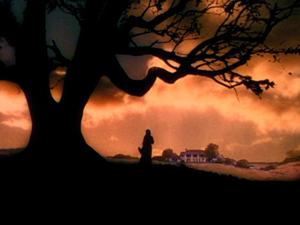
Hollywood’s most celebrated melodrama is still entertaining today. Vivien Leigh does a remarkable job playing one of the most volatile heroines in film history. Scarlet O’Hara begins Margaret Mitchell’s story damned spoiled, and I’m not sure she ever really learns her lesson, but Leigh renders a subtle transformation while always remaining true to character. My other favorites are Olivia de Havilland (sweet in everything she’s in), Hattie McDaniel (who deserved her Oscar), and Butterfly McQueen (for bringing a little comedy to the proceedings). I don’t get Leslie Howard as Ashley. For being the crux of the movie’s romantic triangle, I’d like to have known what was so darned special about him. Max Steiner’s music, especially the Tara theme, is among the most memorable ever composed for film.
Doctor Zhivago (1965)
[4]
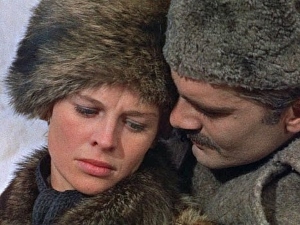
I knew I would eventually have to watch this 3-hour 20-minute behemoth and thank goodness it’s over. Doctor Zhivago is a sprawling epic about the Russian Revolution as seen through the eyes of a doctor (Omar Sharif) who wants to have his cake (his wife is played by Geraldine Chaplin) and eat it, too (his mistress is played by Julie Christie). The first half is dense with plotting and myriad characters — I was getting pretty sleepy. But once Zhivago becomes an exile, I became more alert and the movie picked up speed. Still, when it was all over, I was underwhelmed. He loved two women, he inspired a nation, and I just didn’t care.
Spartacus (1960)
[8]
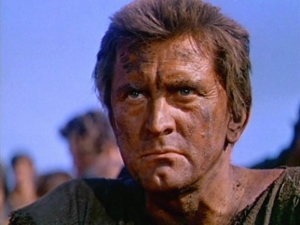
Fans of Ridley Scott’s Gladiator might be surprised how much they will also enjoy (perhaps even prefer) its progenitor. Stanley Kubrick’s Spartacus is a briskly-paced epic, and uncharacteristically emotional compared to his other work. Kirk Douglas is iconic in the lead role, playing a slave forced to fight in the gladiatorial arena for the enjoyment of the aristocracy. Of course he falls in love with a fellow slave girl, of course he escapes, and of course he leads a mammoth army of slaves in revolt against Rome… but when these broad strokes are painted so earnestly, I don’t care. The bleak, bold final act of the film is what really sells the story for me.
The Heiress (1949)
[7]
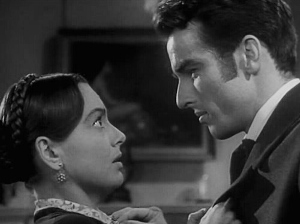
Based on the novel Washington Square by Henry James, The Heiress centers around Catherine (Olivia de Havilland), a shy, socially inept young woman who gets swept off her feet by a dashing young destitute (Montgomery Clift). When her father (Ralph Richardson) accuses the man of preying on his daughter’s inheritance, he threatens to cut her off. Putting all her faith in her first love, Catherine ends up brutally betrayed by both men — and begins to trade her naivete and timidity for spite and cruelty.