
[4]
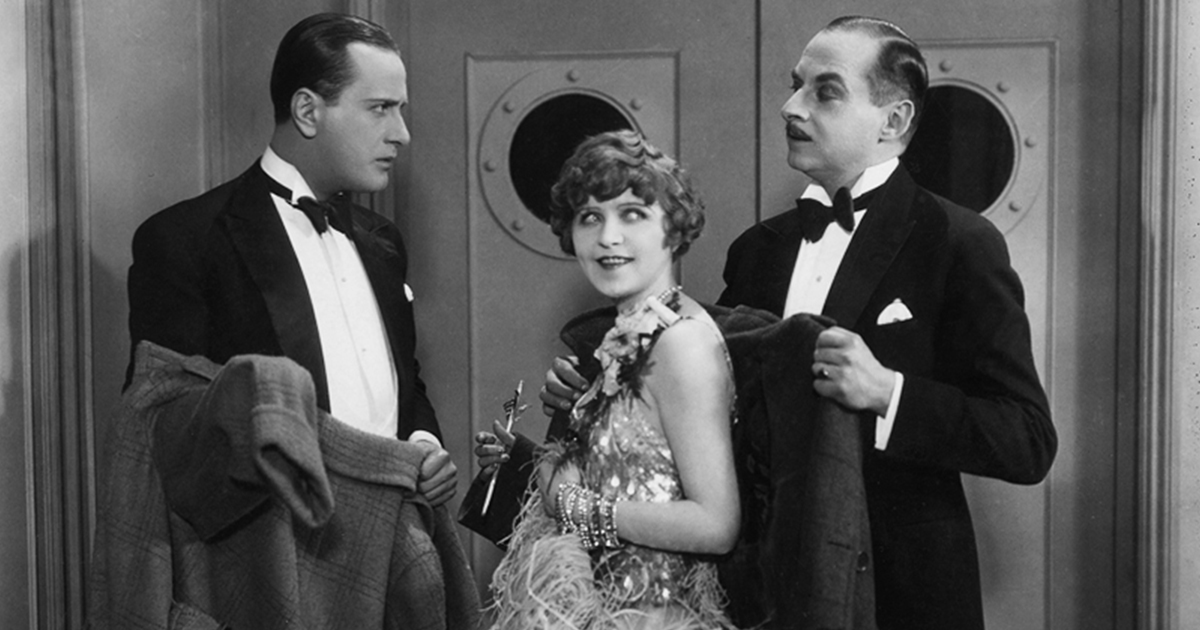
The eighth of Alfred HItchcock’s nine silent films is one of his most mundane. Betty Balfour stars as an American heiress who defies her father by chartering a plane to intercept her boyfriend on an ocean liner bound for Paris. The two plan to elope, but have a falling out before the ship docks. Her father, played by Gordon Harker (The Ring, The Farmer’s Wife), meets up with her in Paris to inform her of a stock market crash. To make ends meet, she gets a job as a flower girl at a nightclub, where she meets up with her former beau (Jean Bradin) and another mysterious suitor (Theo Von Alten) who’s been keeping an eye on her.
Champagne is essentially another love triangle, popular not just with Hitchcock, but seemingly with all of ’20s and ’30s cinema. Will Balfour’s character choose Bradin or Von Alten? Balfour is plenty charming, often reminding me of “It Girl” Clara Bow, but the film just isn’t as funny as it wants to be. The most memorable scene is one of its most uncharacteristic ones, where Balfour is sexually assaulted by Von Alten in a secluded corner of the nightclub. Just as we think the film might be taking an interesting turn, the scene is quickly revealed to be a daydream. Von Alten’s voyeuristic character isn’t who he seems, though. Our uncertainty of his motivations is one of few things propelling the narrative, but alas — he’s ultimately a red herring.
This comedy film is perhaps one of the furthest from what we’d come to expect from ‘the master of suspense’, although it does feature more inventive camera movement and editing than most of his other silent films, particularly with subjective point-of-view shots. The story is drawn-out and relatively dull, but Hitchcock seems to amuse himself with an elaborate, multi-faceted nightclub set full of extras, and use of oversized props to achieve trick shots looking through champagne glasses.