
[5]
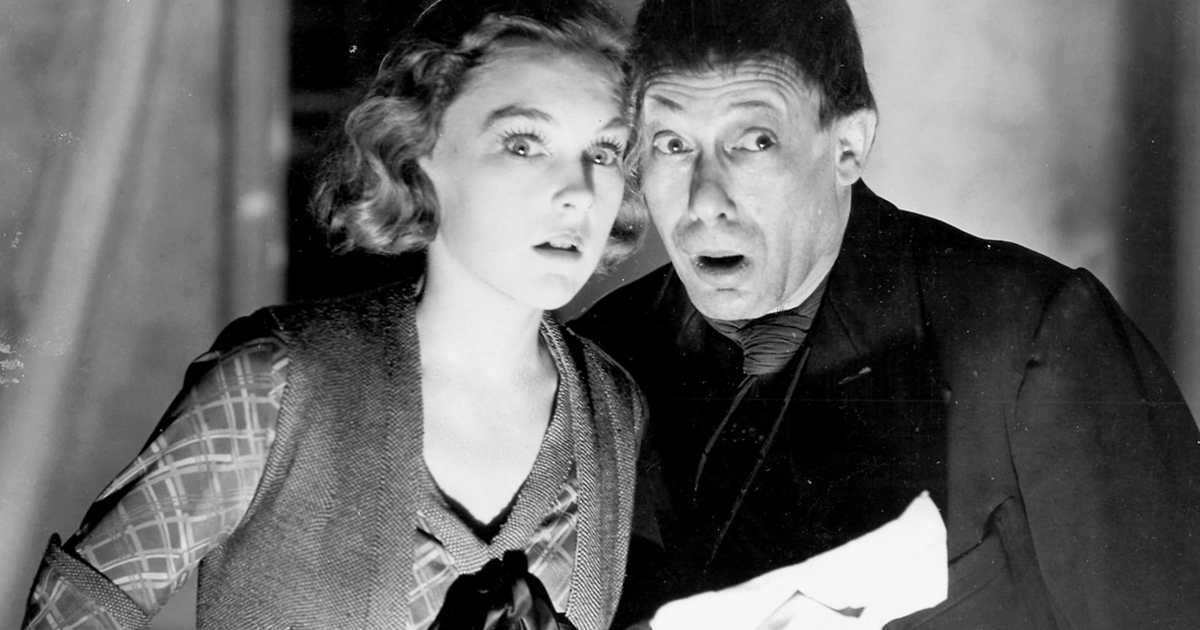
In one of Alfred Hitchcock’s weirdest movies, several characters converge at an empty house in the middle of the night. One character may or may not be a police detective, others may or may not be crooks. Only a Cockney tramp (Leon M. Lion) is who he seems to be, providing comedic commentary to the proceedings. It’s eventually revealed that everyone is there because of stolen jewelry, and the film ends in a remarkably ambitious train and bus chase.
Number 17 is one of Hitchcock’s most critically panned films, and I can see why. Apart from Lion’s charismatic performance, the acting is overly-theatrical. The plot is completely nonsensical, and the story has no discernable depth or meaning beyond its surface-level shenanigans. Many speculate that Hitchcock was assigned to make this film and made a ‘bad’ movie on purpose, just to fulfill his contract with British International Pictures. But you know what? I’d rather watch an interesting bad movie than a boring good one. So I can’t hate Number 17.
It’s not the most grounded or meaningful storytelling, but it’s playful and succinct, clocking in at just 66 minutes long. The photography is full of moving light sources and shadow play that keep the film visually interesting. It’s also the most kinetic and action-oriented film of the director’s early career. The fist-fights are laughably executed, but the climactic chase sequence contains progressive, breathtaking film editing and a lot of nifty model photography. Few films of this era ever attempted such large-scale action and cross-cutting between scenes. Hitchcock was clearly having fun with the medium in ways no prior film permitted. That glee is infectious, and for me at least, it pulls Number 17‘s ass out of the fire.
With Anne Grey, John Stuart, Donald Calthrop, Barry Jones, Ann Casson, Henry Caine, and Garry Marsh. Based on a play by Joseph Jefferson Farjeon.