
[7]
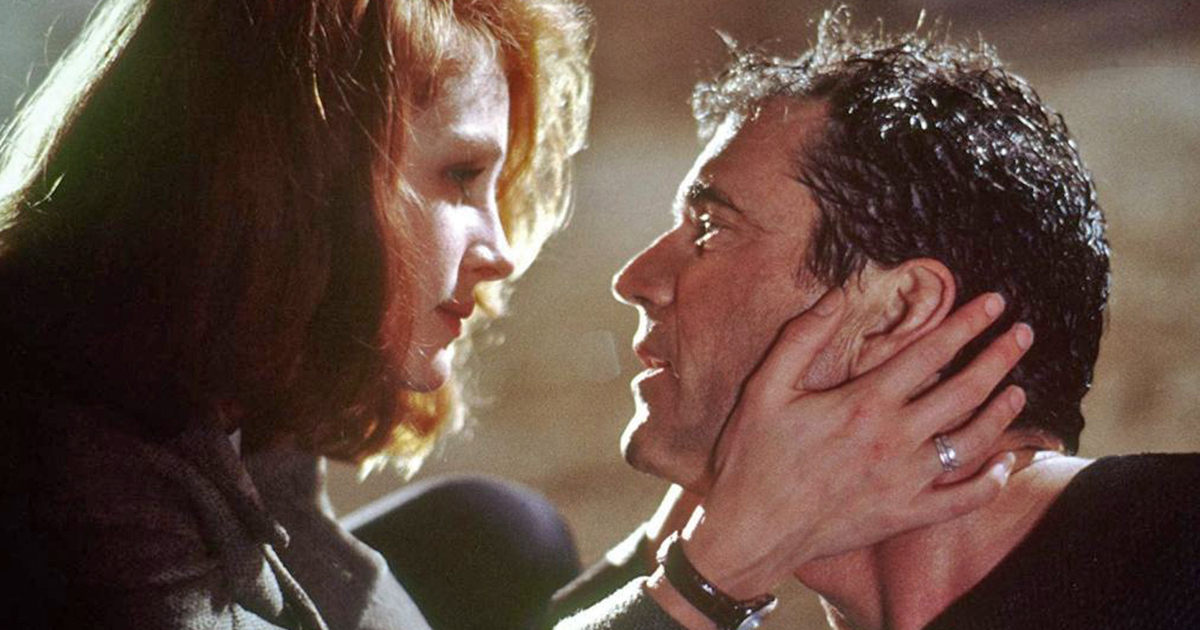
Superstars Mel Gibson and Julia Roberts co-star in this psychological thriller from director Richard Donner (Lethal Weapon, Superman) and writer Brian Helgeland (L.A. Confidential, Mystic River). Gibson plays a deeply paranoid and broken New York taxi driver who peddles conspiracy theories in his small, self-published magazine. One of his only tolerant acquaintances is Roberts’ character, a lawyer he rescued from a street crime several months prior to the film’s opening. She doesn’t believe his delusions until she gets caught up in a cat-and-mouse chase between Gibson and a shadowy agency represented by Patrick Stewart (Star Trek: The Next Generation). The more she learns from Gibson, the more she realizes that she and her late father are part of the mystery.
Conspiracy Theory isn’t the most exciting or engrossing title in anyone’s filmography, but it does more right than wrong. It’s refreshing to see Gibson play such a vulnerable, damaged character, and while Roberts’ character doesn’t offer her anything too different from her usual fare, at least it gives her agency in the climax. It’s the woman who saves her man for a change. Helgeland’s characters are ripe with potential, their backstories kept a mystery throughout much of the film. While this makes the film more interesting as we uncover the truth and origins of their relationship, it also makes the first half of the movie a bit of a challenge. Why does Roberts indulge Gibson’s seemingly crazy, potentially dangerous character? It’s hard not to hold Gibson at arm’s length for stalking Roberts, too — at least until we learn that important, withheld backstory.
Despite its character development being somewhat suppressed by wonky plot mechanics, Conspiracy Theory is still a moderately good time at the movies. Donner keeps things moving along at a good pace, and the character-driven script gives its stars time to shine. Patrick Stewart makes for a nice, duplicitous villain, though one wishes he’d really cut loose at times. Composer Carter Burwell makes a substantial contribution with his bright and rhythmic score, one that helps counterbalance the film’s dread and paranoia.
With Cylk Cozart, Steve Kahan, and Terry Alexander.