
[7]
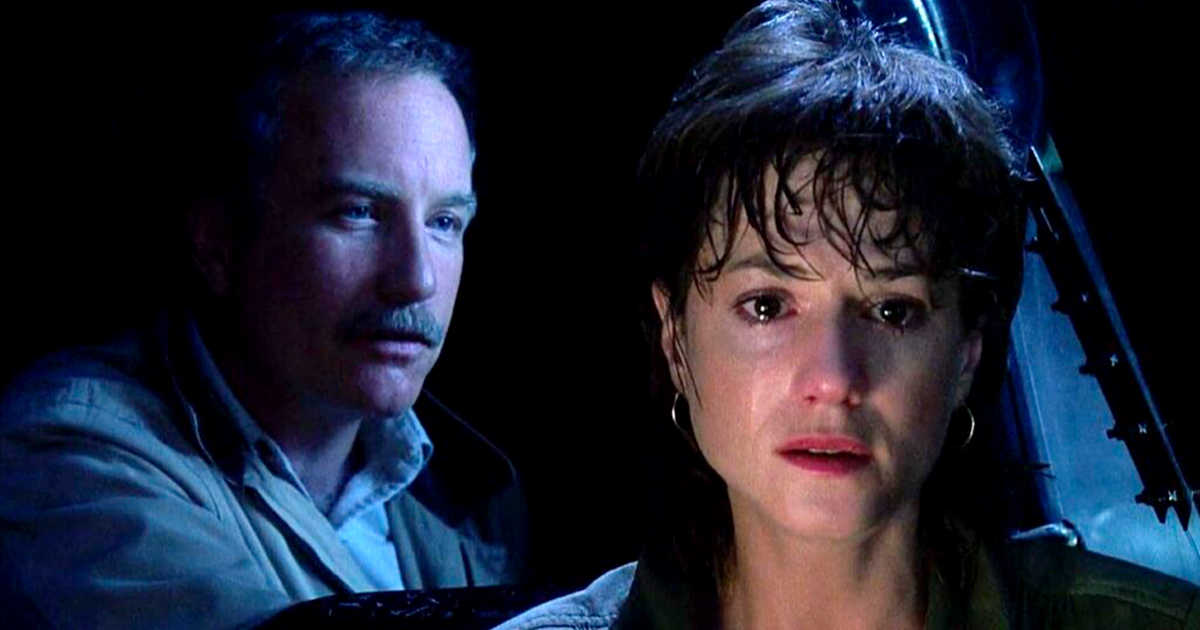
One of director Steven Spielberg’s less successful films remains this fantasy-romance starring Richard Dreyfuss, Holly Hunter, and John Goodman as aerial forest-fire fighters and best friends. When Dreyfuss’s character perishes in action, he comes back as a guardian angel assigned to guide a younger pilot (Brad Johnson). But when the pilot falls in love with the girl Dreyfuss left behind (Hunter), a supernatural love triangle begins. Audrey Hepburn appears, in her final screen performance, as an elder angel who mentors Dreyfuss, reminding him that selflessness is the only path to freeing himself and Hunter from the bonds of grief.
If you’re not a fan of Spielberg’s tendency toward sentimentalism, it might be best to steer clear of Always. Jerry Belson’s screenplay undercuts the intrinsic mawkishness with a lot of sarcastic dialogue, but it isn’t quite enough to counterbalance the cumulative effect of Mikael Salomon’s ‘magic hour’ dusk lighting and John Williams’s lilting underscore. As for me? I love the lighting, the music, and the sentimentality. Spielberg was the closest thing we had to the optimism of Frank Capra in the ’80s, a decade that grew increasingly more cynical as it wore on.
If you don’t consider ‘sentimental’ a four-letter word, you might find a lot to enjoy in Always. Dreyfuss and Hunter have chemistry. (They would appear together again in the following year’s Once Around.) Brad Johnson comes off at first like a mere handsome oaf, but he becomes more appealing as the film goes on — especially after he starts imitating John Wayne to break the ice with Hunter. The first half of the film struggles with momentum after Dreyfuss dies, and Hepburn may not be utilized as powerfully as she could have been, but Always manages to say something meaningful about loss and grief without becoming too dark or upsetting. It’s an imperfect film, but one with a warm and comforting vibe.
With Roberts Blossom, Keith David, Marg Helgenberger, and Dale Dye. Based on the 1943 film A Guy Named Joe.
FYI: The plot of Always is remarkably similar to 1990’s surprise hit Ghost, released just seven months apart. Both films feature women haunted by ghostly boyfriends who had trouble saying “I love you” while they were alive, and feature centerpiece moments built around hit songs from the late ’50s — “Unchained Melody” in Ghost, and “Smoke Gets in Your Eyes” in Always.