
[7]
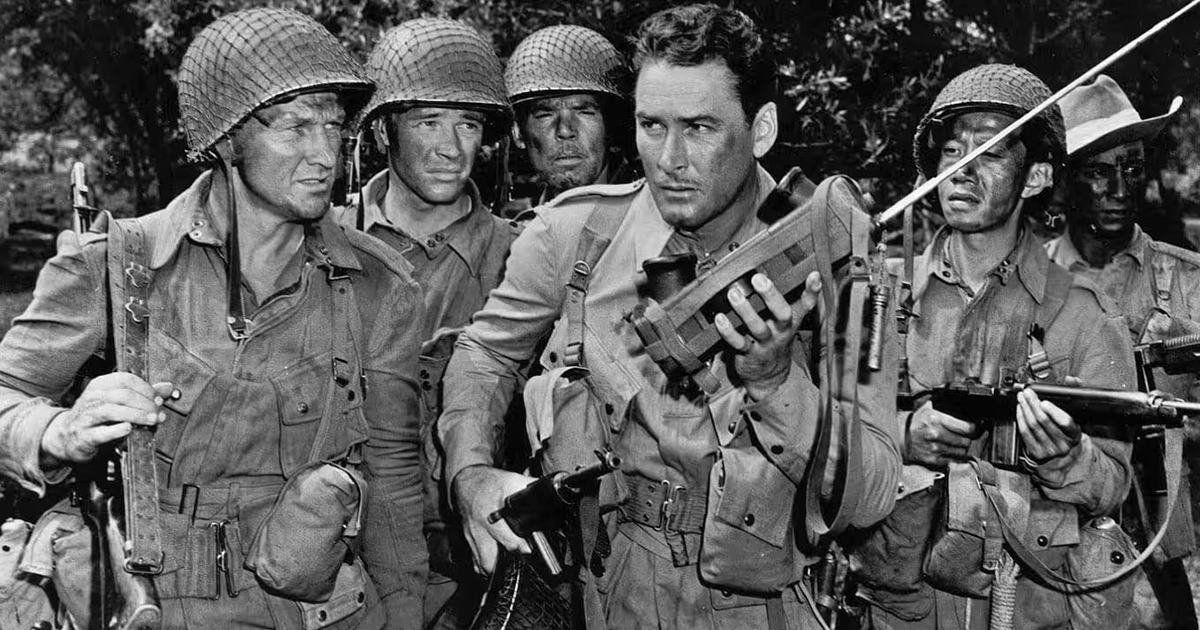
Errol Flynn leads a special ops platoon who parachute into Japanese-occupied Burma during World War II. Their mission is to blow up an important radar station, then make their way to an abandoned runway for pickup. But when the Japanese swarm the runway, Flynn and his troops are forced to try escaping the area on foot. The men suffer attrition through hunger, exhaustion, and death at the hands of the enemy. Before their radio is destroyed, they are ordered to a certain hilltop where they dig in against a final, climactic Japanese attack — not knowing if they will survive the night, or if anyone is coming to rescue them.
Objective, Burma! reunites Flynn with his favorite director, Raoul Walsh (Gentleman Jim, Silver River), who manages to keep us engaged in the plight of these men despite an overly-long runtime of two hours and twenty minutes. As with most wartime films, it’s the fraternal bond among the troops that becomes the emotional core of the film. Flynn is more measured than usual here, playing a fair, level-headed leader whose troops would follow him ‘down the barrel of a canon’, as one of the soldiers says. Henry Hull has perhaps the second-biggest role, an older journalist embedded with the team. He’s respectfully warned by Flynn before departure that he might be too old for the mission, but he’s determined to document the men’s courage and resilience for the folks back home.
Objective, Burma! is one of the more realistic and believable World War II films from the ’40s, which are often more like propaganda pieces for the U.S. military than accurate portrayals of wartime drama. There’s no self-aggrandizing or flashy heroics in this film. These men become desperate and fearful. That they can keep a stiff upper lip and stand by each others’ side under such circumstances is what makes the best war movies so compelling.
With James Brown, William Prince, George Tobias, Warner Anderson, John Alvin, Mark Stevens, and a dynamic score by Franz Waxman. Look for Leave It to Beaver‘s Hugh Beaumont as an uncredited army captain.
Oscar Nominations: Best Original Story (Alvah Bessie), Film Editing (George Amy), Score (Franz Waxman)