
[7]
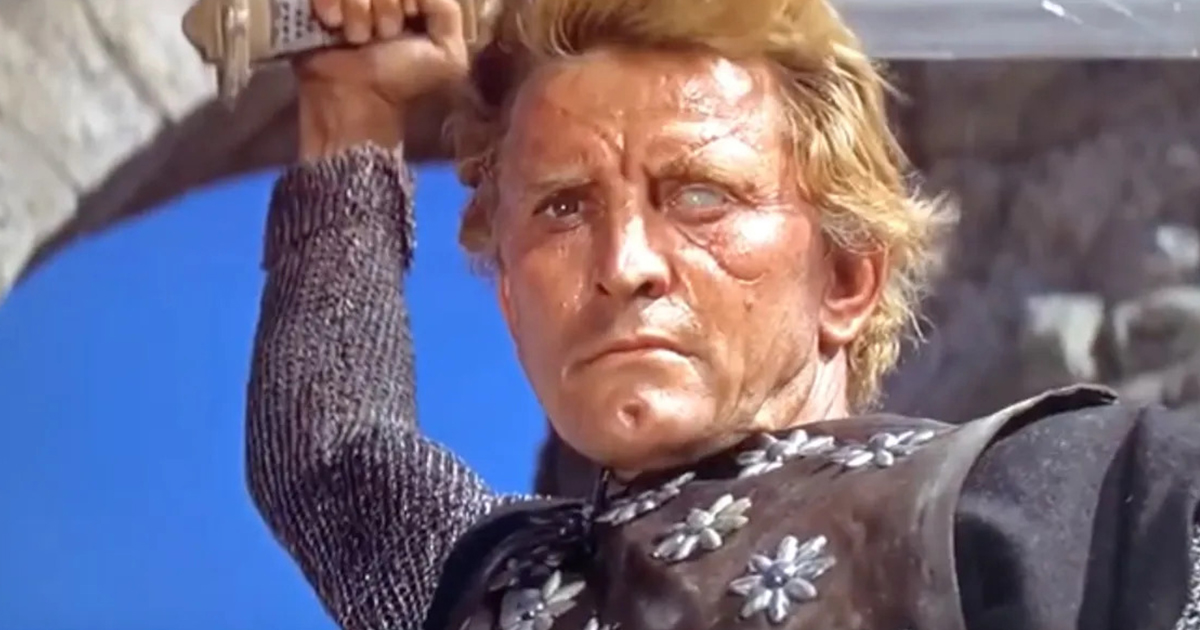
Tony Curtis and Kirk Douglas co-star in this lavish, somewhat compromised adventure-drama set in medieval England and Norway. Douglas plays an aggressive Viking prince and Curtis plays his English slave, neither of them realizing they share the same Viking father (Ernest Borgnine). The two come to blows over a hostage princess (Janet Leigh) who’s already been promised to an English king. Curtis and Douglas’s characters put aside their differences long enough to launch an attack against the king, but a final, fatal showdown between the half-brothers is inevitable.
The Vikings is remarkable for its beautiful, authentic location scenery in the craggy fjords of Norway. Kirk Douglas produced the film, insisting on a degree of historical accuracy seldom seen in studio productions. In addition to shooting where British/Viking conflict really took place, the production also built three fully functional Viking ships based on blueprints preserved in a Norwegian museum. Photographed by Oscar-winning cinematographer Jack Cardiff (Black Narcissus, The Red Shoes), The Vikings is a gorgeous film to look at.
The film moves at a pace befitting a matinee adventure. In fact, the opening twenty or thirty minutes move a little too fast, delivering enough prelude and exposition to be disorienting. Once we jump twenty years into the future, Douglas, Curtis, and Borgnine enter the picture and The Vikings gets finds its groove. All three of these actors are great here, exuding enough charisma to compensate for some narrative shortcomings. Due to censorship, the inciting incident — the rape of an English royal by Borgnine’s character — is only hinted at. The film’s central romance between Curtis and Janet Leigh is also curtailed, as is the villainous English king’s climactic vanquishing.
Even without tampering by the censors, The Vikings features ‘heroes’ that audiences may find problematic or alienating. As gregarious and entertaining as Douglas and Borgnine are, their characters treat women so atrociously that it’s hard to ever root for them. Curtis and Leigh are more relatable, but the film tries too hard to idolize Douglas’s controversial character at the expense of Curtis’s more genuinely heroic one. The film also spends too much time setting up Curtis’s secret, royal bloodline — a plot point that never really pays off.
If the script were given a little more time to gestate and the censors hadn’t hobbled some of the most critical plot points, The Vikings could have been a classic. Even with these issues, however, The Vikings casts a seductive spell. The story’s broad strokes fall in-line with epic storytelling, the characters are interesting, and the setting is truly captivating.
Directed by Richard Fleischer (20,000 Leagues Under the Sea, Soylent Green). With James Donald, Frank Thring, Alexander Knox, and unnecessary opening narration by Orson Welles.