[9]
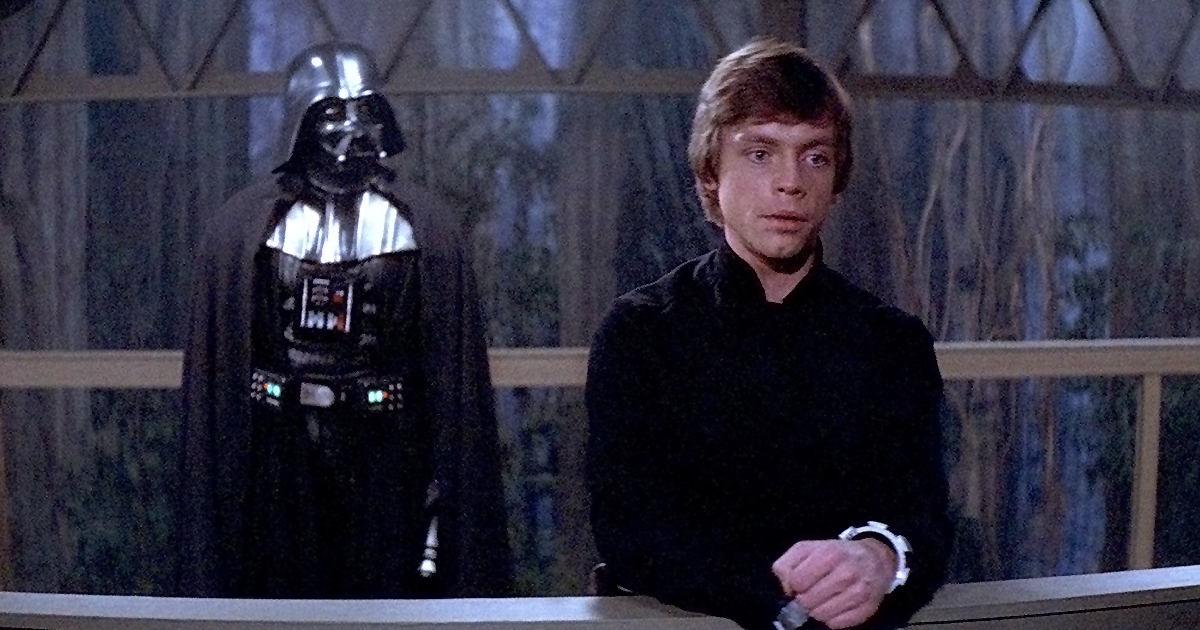
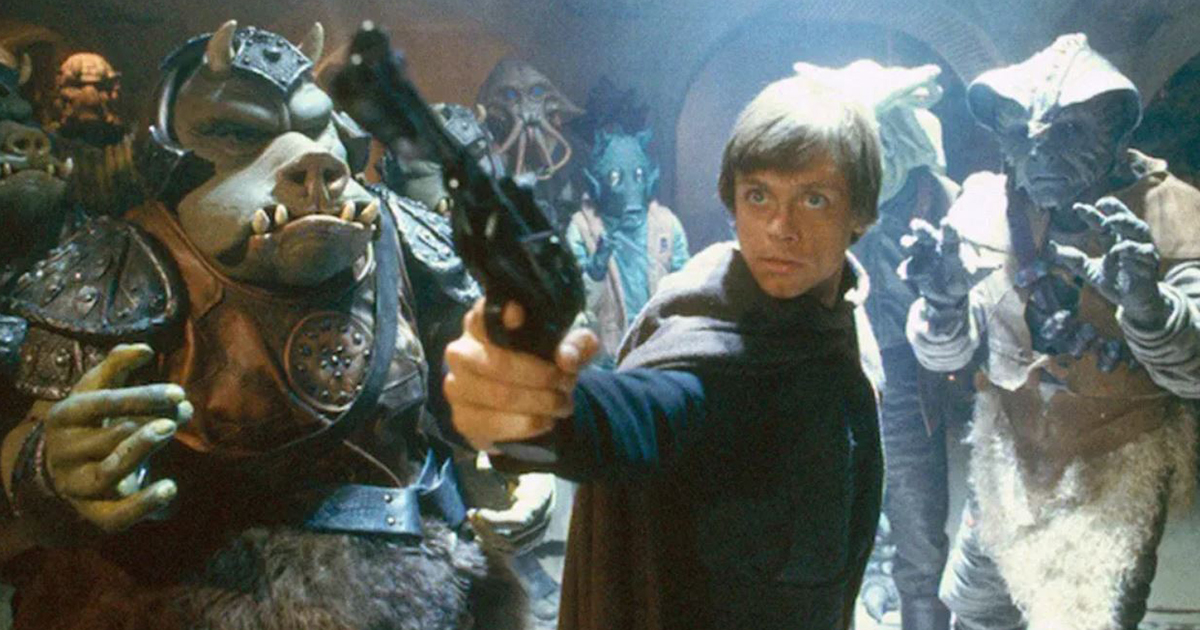
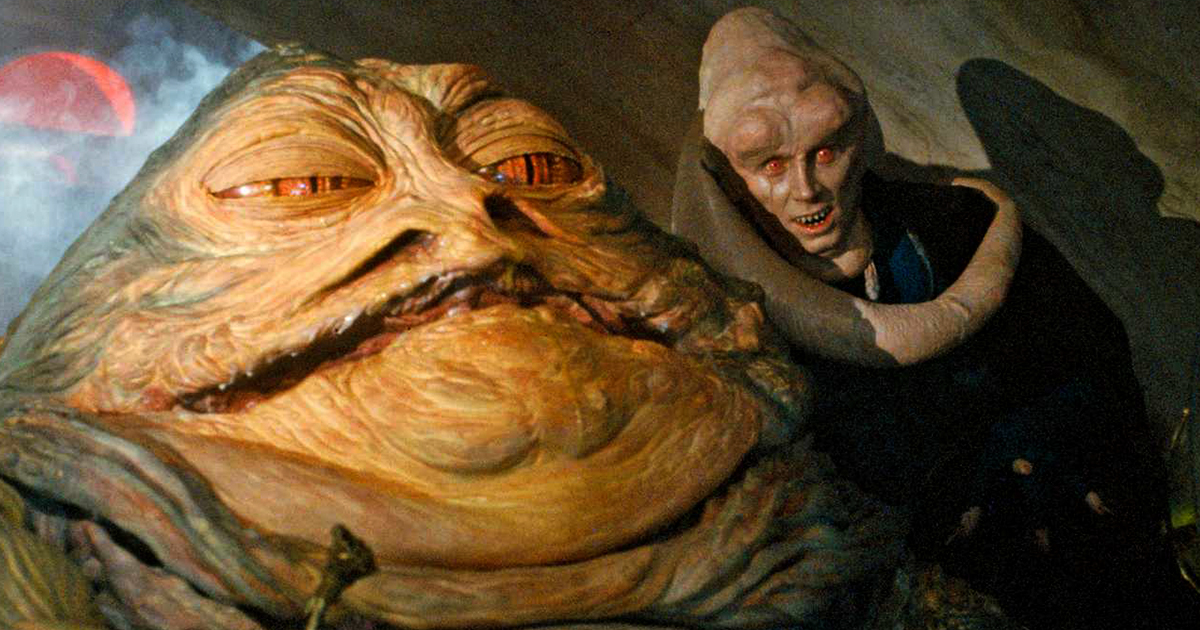
George Lucas wraps up his historic, original Star Wars trilogy with an entry that’s widely considered inferior to the first two films — but that’s more a testimony to the unparalleled excellence of those prior films than a knock against it’s concluding chapter. Return of the Jedi wraps up loose story threads while introducing us to some of the franchise’s most indelible creatures and destinations. Luke Skywalker (Mark Hamill), Princess Leia (Carrie Fisher), and Lando Calrissian (Billy Dee Williams) infiltrate the palace of the slug-like Jabba the Hutt, who hangs the frozen Han Solo (Harrison Ford) on his wall as a new favorite decoration. After our heroes escape Jabba and his cronies, Luke returns to Dagobah where Yoda (Frank Oz) and Obi-wan Kenobi (Alec Guinness) confirm that Darth Vader is indeed Luke’s father — and that Leia is his sister.
Our heroes reunite with the Rebel Alliance for a clandestine mission to the forest moon of Endor, where Emperor Palpatine (Ian McDiarmid) is personally overseeing the completion of a new Death Star. After making friends with the moon’s native Ewoks — teddy bear-like warriors who live in the treetops — Han and Leia lead a mission to destroy the Death Star’s shield generator while Lando leads a stellar assault on the battle station and the Ewoks wage war against the Empire’s ground forces. Meanwhile, Luke confronts the Emperor with hopes of turning his father back to the good side of the Force.
I was nine when I saw Return of the Jedi for the first time, and I’d been looking forward to it for three full years since The Empire Strikes Back ended with its unforgettable cliffhanger. I’ve never anticipated a movie more, and I’ve probably never adored any other film longer or more passionately than I loved Return of the Jedi as a child. But you know what? I still love this movie in my middle-age. Even though the script by Lucas and Lawrence Kasdan isn’t quite as dramatic or surprising, the son’s quest to redeem the father resonates. Richard Marquand’s direction feels more perfunctory than the purposeful, elegant approach Irvin Kershner took with Empire, but Jedi makes up for this in thrills and escapism. Highlights include Luke’s fight with Jabba’s ferocious Rancor monster and a high-speed bike chase through the trees of Endor. The last half-hour of the film is one long battle sequence, cross-cutting between the action on Endor, the Emperor’s Death Star throne room, and the space between.
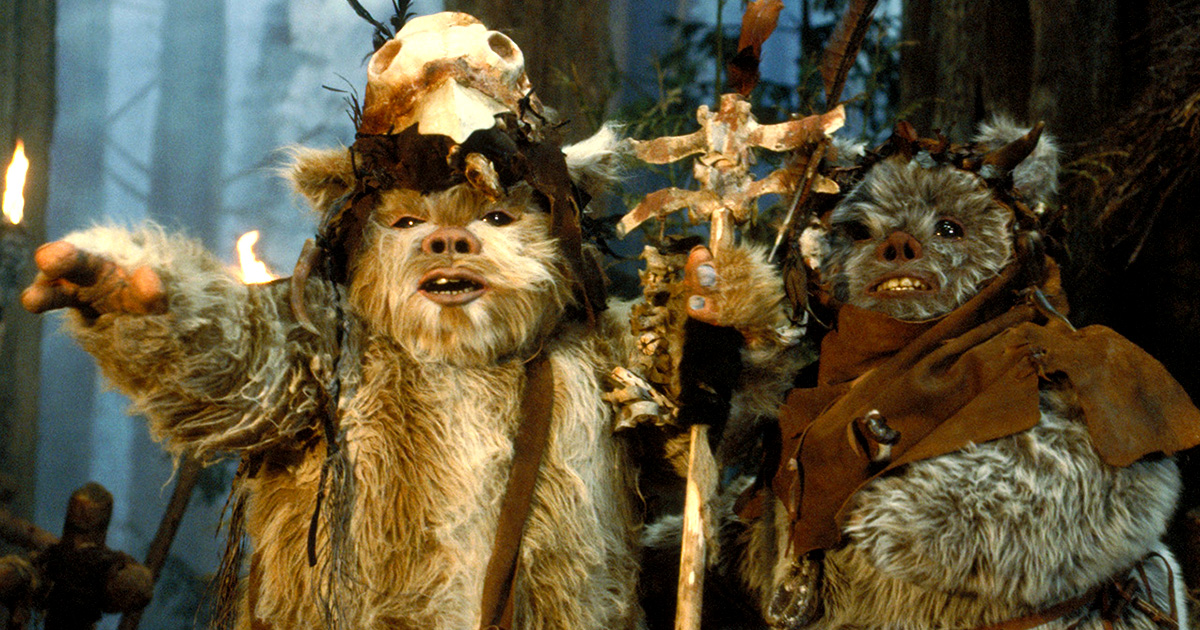
Like the previous two films, Return of the Jedi pushes technology to the limits, delivering more visual effects shots than any film before it, including industry-defining achievements in makeup, matte painting, model work, puppeteering, and optical compositing. No other film had ever gone to such lengths to create convincing new worlds. More than anything, I love how exotic this movie is. I know many people loathe the number of puppets and critters that run rampant throughout the film, but I think it enriches the story’s universe and the movie’s atmosphere. Jedi is a rarity for the sheer volume of alien creatures on display, all of which are tangible — not computer-generated. George Lucas utilizes everything in the cinematic arsenal — actors in prosthetics, a wide variety of puppets, and of course, little people in teddy bear suits to populate his world. It was the last time we’d ever see these tangible techniques used on a scale so grand, and for that reason, Jedi is very precious to me.
Bolstered by brilliant film editing, another dynamic John Williams score, and Ben Burtt’s inventive sound design, Return of the Jedi is a film lovingly crafted and richly detailed, making it one of the most rewatchable films ever made. Even if it falls a little short of the high standard set by Star Wars and The Empire Strikes Back, it’s still an amazing achievement and a monstrously fun time at the movies.
With Anthony Daniels as C-3PO, Peter Mayhew as Chewbacca, and James Earl Jones as the voice of Darth Vader. Warwick Davis (Willow) makes his acting debut at age 11 playing Wicket the Ewok.
NOTE: This review is of the original, uncut, unaltered, theatrical version of the film. I find the 1996 ‘Special Edition’ and all subsequent revisions of the film unacceptable.
Academy Award: Special Achievement in Visual Effects
Oscar Nominations: Best Score, Best Art Direction, Best Sound, Best Sound Effects Editing