Thoroughly Modern Millie (1967)
[6]
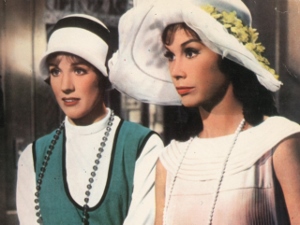
Julie Andrews stars in this 1920s madcap musical as the title character, a woman looking to land a job and a husband in the big city, but ends up embroiled with a nefarious white slave trader! Mary Tyler Moore is underutilized as the woman Millie has to rescue from slavery, but Carol Channing chews the scenery in a bizarre Oscar-nominated performance only she could have pulled off. The musical numbers are a little unrelated to the storyline and they do go on a bit long, but there aren’t many numbers in the movie, and I believe they’re all over before the intermission. After the intermission, things move very quickly. Director George Roy Hill (The Sting, Butch Cassidy and the Sundance Kid) stretches out of his comfort zone so well, the last half-hour will have you wondering if Blake Edwards took over the film. It’s an intentionally silly, over-the-top sort of movie that pays off better than most of its sort.
Waterloo Bridge (1931)
[7]
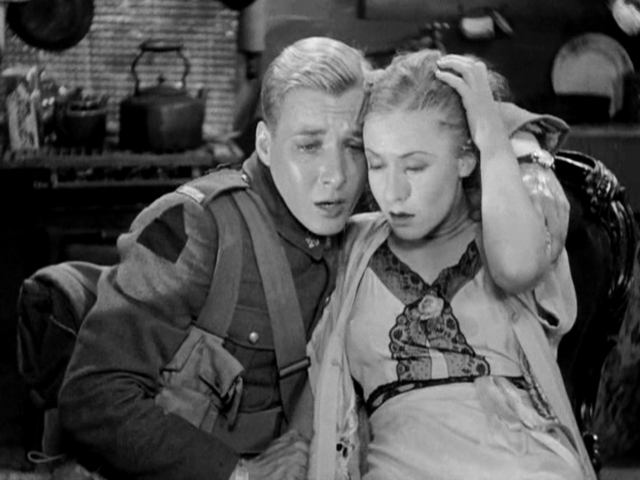
This is the first of at least three film versions of Robert L. Sherwood’s play about an American soldier who falls in love with a Londoner during a World War I air raid, unaware that she is a prostitute. Director James Whale (Frankenstein, The Invisible Man) delivers a solid melodrama with two great lead performers. I was particularly taken with Kent Douglass as Roy. At times, he seemed to display the kind of naturalistic acting style that wouldn’t become popularized until Brando hit the scene decades later. I totally bought Roy’s doe-eyed infatuation with Myra (Mae Clarke), hook, line and sinker. Clark is good with the tremendous amount of pathos the screenplay gives her to work with.
Doctor Zhivago (1965)
[4]
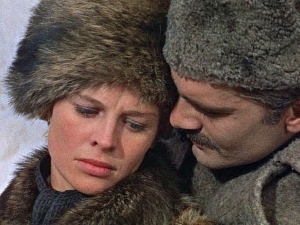
I knew I would eventually have to watch this 3-hour 20-minute behemoth and thank goodness it’s over. Doctor Zhivago is a sprawling epic about the Russian Revolution as seen through the eyes of a doctor (Omar Sharif) who wants to have his cake (his wife is played by Geraldine Chaplin) and eat it, too (his mistress is played by Julie Christie). The first half is dense with plotting and myriad characters — I was getting pretty sleepy. But once Zhivago becomes an exile, I became more alert and the movie picked up speed. Still, when it was all over, I was underwhelmed. He loved two women, he inspired a nation, and I just didn’t care.
The Island of Dr. Moreau (1977)
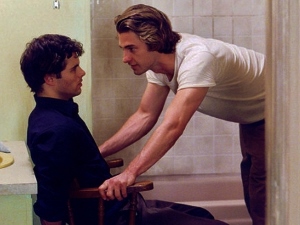
The 24th Day (2004)
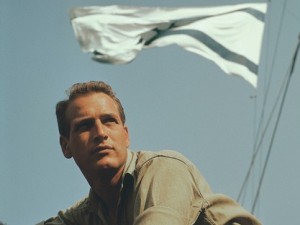
Exodus (1960)
Ladyhawke (1985)
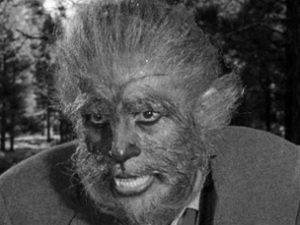
The Werewolf (1956)
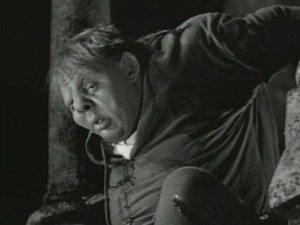
The Hunchback of Notre Dame (1939)
[6]
Charles Laughton’s performance as Quasimodo is the main reason to see this movie. Laughton gives the deformed bell ringer moments of quiet torment as well as unbridled joy, and without ever going over the top – a remarkable feat that should have earned him an Oscar nomination. I also liked Cedric Hardwicke as the malevolent Frollo and Maureen O’Hara (in her screen debut) as Esmerelda, but several of the other cast members act as though they are playing cartoon characters (Harry Davenport is the worst offender). The film could have benefited from a more genuine period setting and a more earnest supporting cast. Director William Dieterle bestows the film with some elegance, though it’s not nearly as polished as his later work on The Devil and Daniel Webster.