
[6]
Walt Disney adapts J.M. Barrie’s story about three children from London — Wendy, Michael, and John Darling — who take a magical trip to Neverland with a hero only children can see: Peter Pan. Pan, an eternal boy who’ll never grow up, takes them there for a respite from reality and impending adulthood. In Neverland, the characters revel in the embodiment of childhood imagination, meeting Pan’s Lost Boys, visiting the mermaids, pow-wowing with the Indians, and entangling with the dastardly Captain Hook.
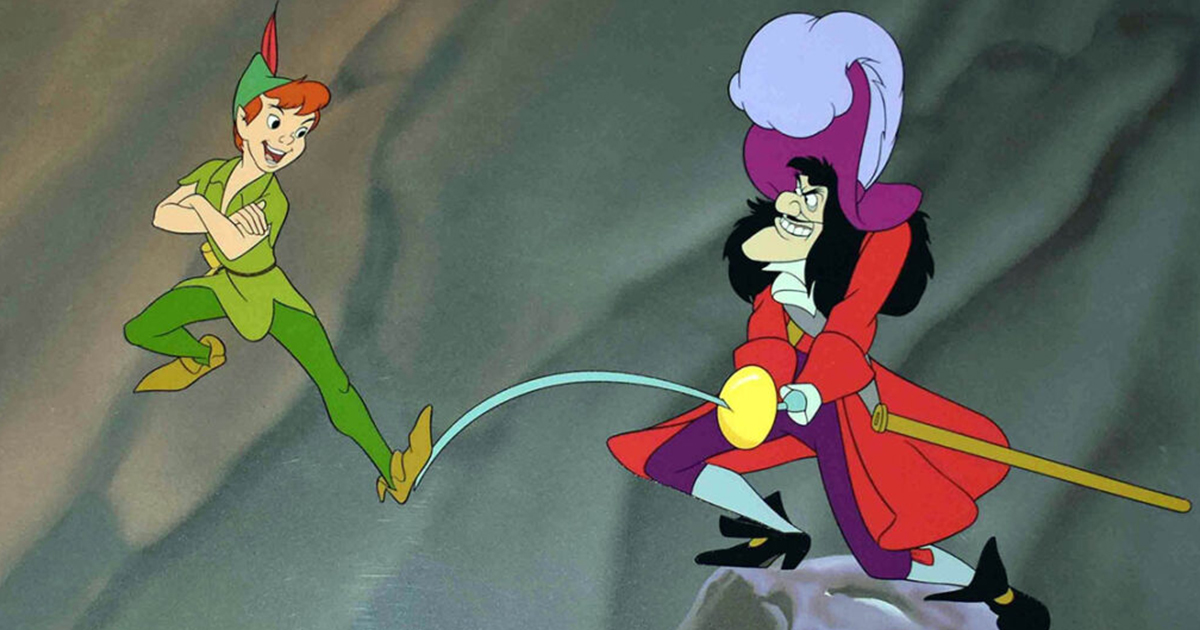
Peter Pan is a moderately entertaining Disney animated classic, thanks to character more than story. Barrie’s plot is episodic in nature, lacking a dramatic hook (pun intended) to drive the overarching narrative. But Disney keeps the film fanciful and good-humored. Peter Pan and the Darlings aren’t as developed as they need to be, but the film compensates with colorful characterizations of the nasty, foppish Captain Hook (voiced by Hans Conried) and the dangerously jealous Tinkerbell, a mute sprite who’ll remind viewers of Marilyn Monroe. My favorite scenes are the comedic ones between Hook and his right-hand man, Smee (Bill Thompson), especially when the old crocodile is nearby and rearing to eat the rest of Hook (he already ate his hand).
The animation is smooth and polished, though never as sophisticated or as striking as Disney’s earlier work in Bambi and Pinocchio. The score is hit-and-miss, successful in its memorable motifs for Pan and the crocodile, but often grating in the way it ‘Mickey Mouses’ to the action — a term used when a score punctuates the on-screen character movements in all-too obvious ways. Song numbers like “You Can Fly!”, “Following the Leader,” and “What Makes the Red Man Red” are catchy, enhanced by the mellifluous vocal stylings of the Jud Conlon Chorus and the Mellomen.
Directed by Clyde Geronimi, Wilfred Jackson, and Hamilton Luske, the same trio who directed Cinderella and Alice in Wonderland. With the voices of Bobby Driscoll as Peter Pan and Kathryn Beaumont as Wendy.