
[10]
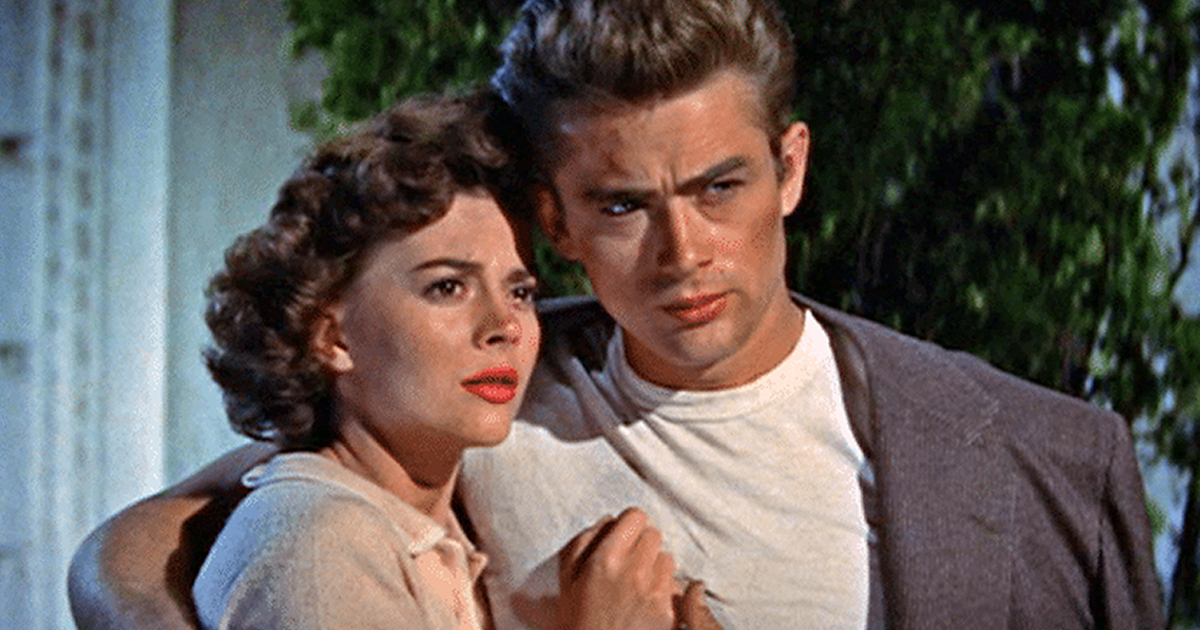
James Dean gives one of the most iconic performances in movie history as Jim Stark, an angst-ridden teenager who quarrels with his parents almost as much as he tangles with high school bullies. I normally hate tough guy movies, and I’d normally put teenagers with puffed-out chests in the same group as mobsters — but Rebel Without a Cause doesn’t glorify bravado. The Oscar-nominated screenplay is more concerned about the vulnerable, real person underneath the macho façade. Jim’s ‘rebel’ outbursts come out of despair. He’s forced into violence by the school bullies while his parents trivialize his feelings. He’s got nowhere to turn — nowhere to let it all out — especially when tragedy strikes, claiming the life of a rival boy.
And that’s when the interesting part of the story kicks in. Without anyone to hear him or understand him, Jim finds solace with two other confused souls played by Natalie Wood and Sal Mineo (in two Oscar-nominated performances). Together, they form a surrogate family and help each other cope. By playing lover to Natalie and protective big brother (or even father) to Sal, Jim starts to feel a sense of belonging. The film builds to a climactic showdown at an abandoned mansion in the Hollywood Hills, where the three friends find temporary solace — unaware that both the school bullies and the police are closing in on them for a tragic finale.
Under the caustic and energetic direction of Nicholas Ray (In a Lonely Place), Rebel Without a Cause captured the hearts and minds of teenaged moviegoers like no film before it. It tapped into a generational frustration, focusing a spotlight on the conflicting messages teenagers (particularly teenaged boys) receive — essentially, ‘don’t be a wimp,’ but ‘don’t get into trouble.’ It’s also interesting for the relationship Jim has with his father (played by Gilligan’s Island‘s Jim Backus), a hen-pecked man who can’t find the strength to be the role model Jim needs him to be. And I also have to commend the movie for peeling back the curtain a little on the relationship between alpha males. Before the film’s centerpiece drag race, you almost get the feeling that Jim and his adversary (Corey Allen) could be friends. All of this adds dramatic heft and relevancy to a film that may look like it’s marketed to take advantage of newspaper headlines, when it actually probes deeper than an exploitation movie ever would.
At the center, of course, is James Dean himself. Aided by his smoldering good looks, Dean helped introduce the world to a whole new style of ‘method acting’, characterized by vulnerability, volatility, and realism. This is a performance that struck a profound chord in its target audience. After the release of Rebel Without a Cause (a month after Dean’s death in a car accident), teenaged boys across the nation adopted the look of mannerisms of Jim Stark — a character who bemoaned knife fights, drag races, and all the other obligatory teen male rituals. He’s a character in search of sincerity. He isn’t Rambo or John Wayne. This is a character who breaks down and cries several times throughout the film, one whose most heroic act is taking an even more troubled kid under his wing. Such characters are rarely so openly embraced by audiences. It’s a testament to how much audiences saw — and still see — themselves in Dean’s character and performance.
Director Nicholas Ray makes striking use of the film’s super-widescreen framing and composer Leonard Rosenman masterfully blends jazz with romantic Americana in his striking score. These elements may lend to the movie feeling overwrought at times, but if there’s anything more overwrought than adolescence, I don’t know what it is.
With Ann Doran, Dennis Hopper, William Hopper, and Edward Platt.
Oscar Nominations: Best Supporting Actress (Natalie Wood), Supporting Actor (Sal Mineo), Motion Picture Story (Nicholas Ray)
(Note: James Dean could not be nominated as Best Actor for this film because he was already nominated for East of Eden and the Academy rules prohibited an actor from being nominated for two different roles in the same category.)