
[10]
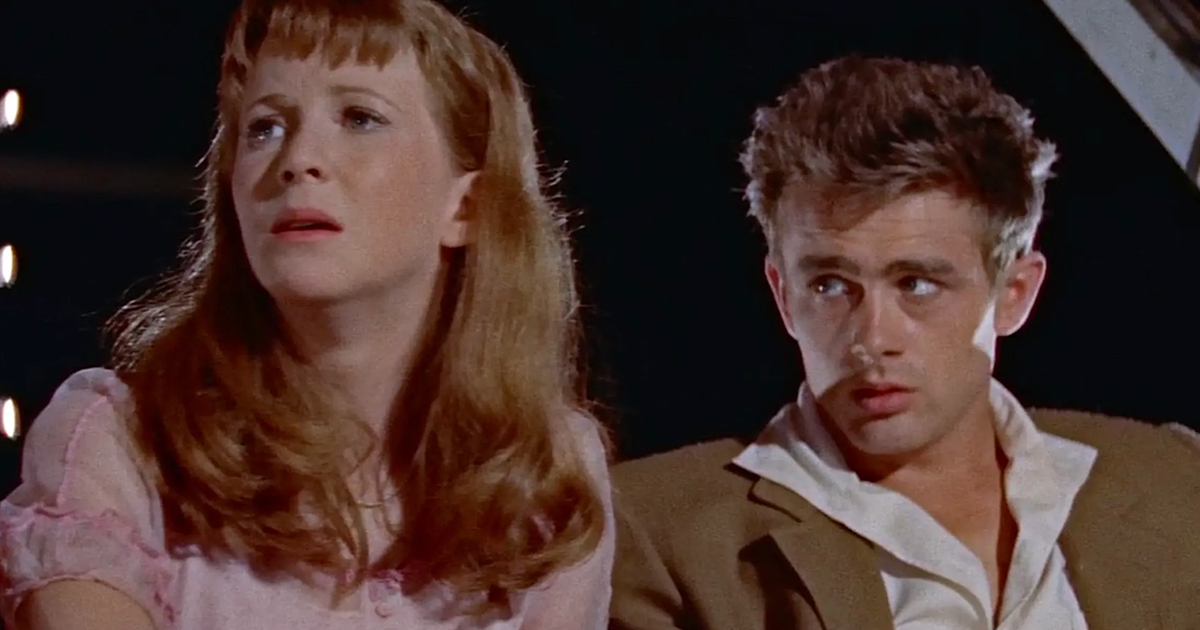
James Dean received the first posthumous acting nomination from the Academy Awards for his riveting performance as the troubled Cal in East of Eden, his first major film role. (He died in a car accident just a few months after the film was released.) The film, elegantly directed by Elia Kazan (A Face in the Crowd, Splendor in the Grass), is based on the last quarter of John Steinbeck’s sprawling novel. Cal is the troubled ‘bad’ son of a pious father (Raymond Massey) who heaps praise upon the ‘good’ son, Aron (Richard Davalos). The family reaches a breaking point when Aron’s girlfriend (Julie Harris) begins to fall in love with Cal, and Cal discovers that their long-missing mother is far from dead, but running a whore house in a town not far away.
Steinbeck believed the power of storytelling was in its ability to remind us of our own humanity, and when I learned that, it helped me understand why I’ve loved this movie for so long. Despite the Biblical binary implications, no one is purely good or purely evil in East of Eden. All the characters must come to terms with their ‘dark’ impulses and potential to do harm. It’s about relationships — between parents and children, between brothers, between lovers. It’s about how we hurt each other, even when we don’t mean to. It’s about how we tend to repress the unpleasant things in our lives, and how those things can come back to destroy us. And ultimately, it’s about healing power of forgiveness.
East of Eden is captivating from the start and exquisitely paced, ripe with complex emotion, motivation, and desires. There are some terribly haunting scenes in the film. I am heartbroken when Cal self-destructs after his father refuses his well-meaning birthday gift, a sum of money earned through war profiteering. It’s horrifying when Cal takes Aron to a brothel to meet their mother for the first time. And I’m incredibly moved by the scenes of vulnerability and confession between Dean and Harris, especially when their impulses lead to a kiss atop a Ferris wheel, betraying their mutual love of Aron.
Jo Van Fleet took home the Best Supporting Actress Oscar for playing Cal’s estranged mom. She may be the darkest, most hardened character in the film, but even she has humanity — quick to fight any pains of regret, and quietly pleased to see something of herself in young Cal. The competent supporting cast also includes Burl Ives as the town’s empathetic sheriff and Lois Smith (Twister, Minority Report) as a one of Van Fleet’s hired hands. But it’s Dean who soars. Even though he’d only appear in two other films, his image would become synonymous with Hollywood and his legacy would resonate for decades to come.
Beautifully framed in the super-wide 2.55:1 aspect ratio, with a gorgeous score by Leonard Rosenman. I don’t think a week goes by that I don’t find myself humming the lilting, intrinsically comforting main theme.
Academy Awards: Best Supporting Actress (Jo Van Fleet)
Oscar Nominations: Best Actor (James Dean), Best Director (Elia Kazan), Best Adapted Screenplay (Paul Osborn)