
[5]
I put off watching Kes for many years because, as a ‘bird person’, I knew the title falcon died at the end of the movie. I finally gathered the courage to see the film, and I’m surprised to report that the dead bird is the least upsetting part of the movie. Kes is a deeply unpleasant, unrelentingly depressing film that I’ll never watch again.
Directed by prolific ‘docudrama’ filmmaker Ken Loach (Sweet Sixteen) and based on a novel by Barry Hines, Kes follows a poor working-class British boy named Billy (David Bradley) through two weeks of his miserable life. He’s fatherless, living with his frazzled mother (Lynne Perrie) and his brutish older brother (Freddie Fletcher). They’re so poor, the brothers share a small bed and Billy has to work early in the mornings before going to school. At school, Billy is bullied by both the students and the teachers, especially a sadistic P.E. teacher played by Brian Glover (Alien 3). And Billy’s future is as dim as his present, with a high likelihood that he’ll end up working in the coal mines with his brother.
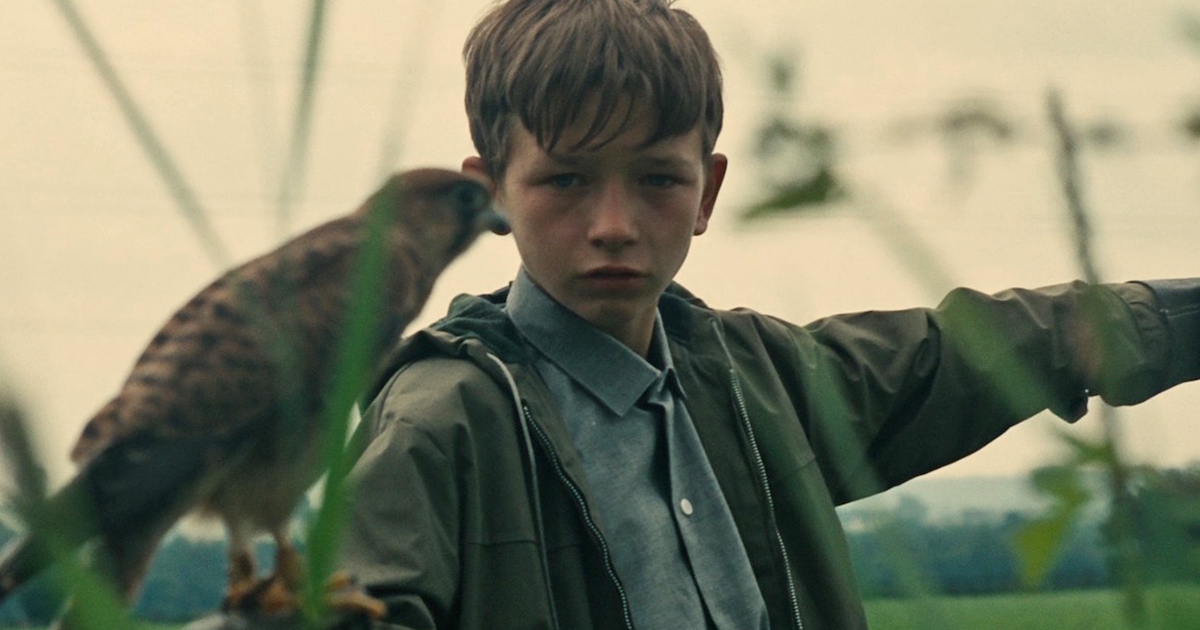
The only bright spot of this boy’s life is falconry. He captures a baby kestrel and trains it. It gives him pride and confidence to do so. It brings meaning to his meager life — that is, until his evil brother kills the bird (thankfully off screen) in a fit of rage. As key to the story as this boy/bird relationship may sound, however, it’s curiously not the focus of the film. Nor is the bird ever presented as a character more than an object. If this weren’t the case, there’s a chance Kes would have emotionally captured the animal lover in me. Instead, Kes is a long, near-narrativeless meditation on how thoroughly shitty it is to grow up poor in Yorkshire in the 1960s.
The most remarkable thing about Kes is the documentary-like approach Ken Loach uses, capturing realistic performances from his cast of all ages in a number of real-world locations. His success is a double-edged sword for me. On one hand, the film succeeds wildly in pulling me into this doomed boy’s life. But on the other hand, why subject an audience to such unrewarding misery? The film would work better for me if there were some humor, even dark humor, to temper the gloom and doom, or if the relationship between the boy and the bird were more compelling — enough to make the film a truly heartbreaking tragedy.