[8]
The undisputed ‘King of Pop’ gets a music-heavy biopic from director Antoine Fuqua (Training Day) that covers his life from the early days of the Jackson 5 in Gary, Indiana, up to the ‘Bad’ tour in 1988, with the promise that “his story will continue” in a second film. Screenwriter John Logan (Skyfall, The Aviator) chooses the contentious relationship between Michael and his abusive father, Joseph (Colman Domingo), as the spine for this biopic’s narrative. The film is therefore the story of a young man who slowly gathers the courage to stand up to his dad, climaxing when Michael leaves the Jackson 5 and moves out of the family mansion at the age of 29.
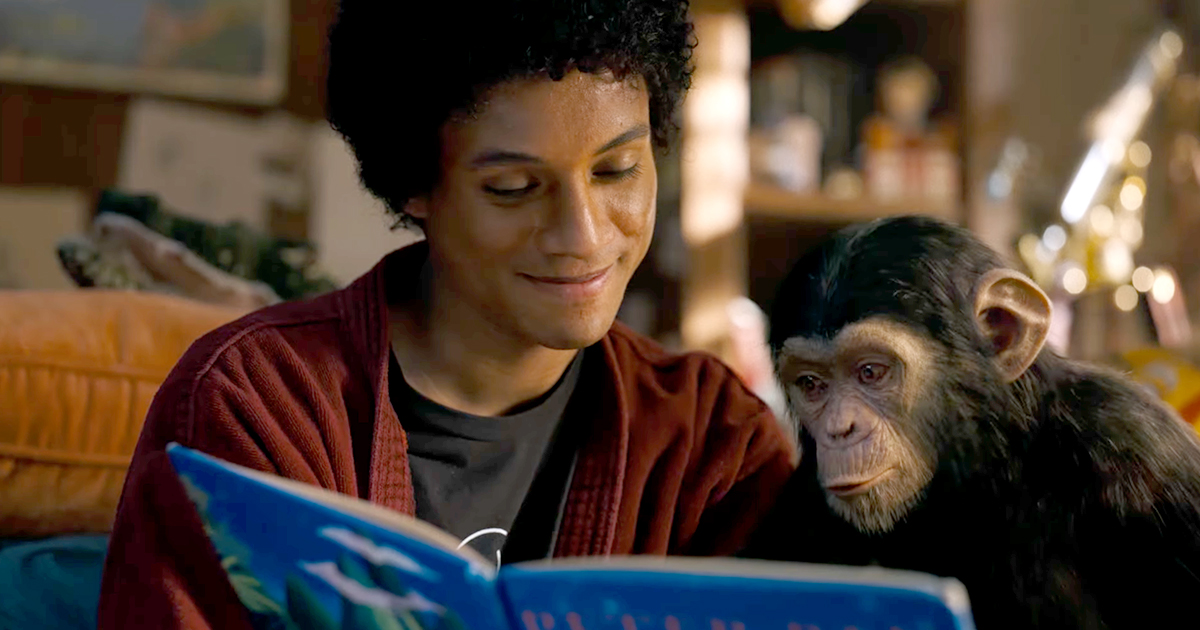
The film is a celebration of Michael, but it also sets him up as a tragic figure. Cursed with a domineering father who robs him of his childhood by forcing him to sing and dance in a drive for absolute perfection, Michael grows up sheltered, socially awkward, idealistic, and disconnected from the world and reality. His only friends are animals. The first is a rat, but when the money starts rolling in he adopts a llama, a giraffe, and of course, Bubbles the chimpanzee. Michael’s arrested development is a double-edged sword. His childlike naivete feeds his infectious optimism and desire to heal the world with his music. But it also ill-prepares him for the intense scrutiny under which he’d soon fall (presumably in the second film). The film also shows the beginnings of other struggles, including plastic surgery, his vitiligo skin condition, and his ultimately fatal addiction to pain killers after the Pepsi commercial accident that gave him third-degree burns and nerve damage.
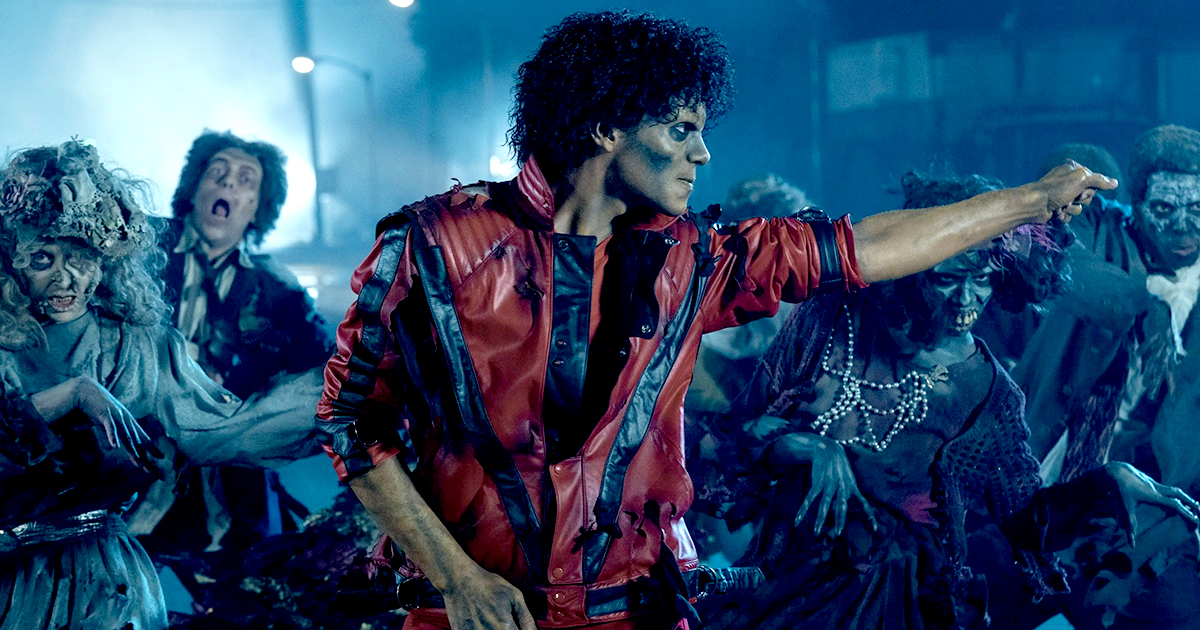
Playing the sensational singer is none other than his real-life nephew, Jaafar Jackson (son of Jermaine). Jaafar captures his late uncle beautifully, both in spirit and in his mannerisms. This is not a mere imitation of Michael. It’s a remarkable embodiment. The singing in the film is reportedly a blend of Michael’s original vocal tracks and Jaafar’s singing voice. Jaafar does the family very, very proud. In the supporting cast, Colman Domingo is the most remarkable — imposing and unnerving as the selfish, manipulative Joseph. Mike Myers (Shrek, Wayne’s World) is fantastic in a cameo, playing the CEO of CBS Records who takes a stand against MTV when the nascent network refuses to give airtime to any black artists.
Michael doesn’t break the biopic mold, but it absolutely delivers the goods. It covers a lot of ground in just over two hours, so much so that you might wish it were a series instead of a single feature film. The smartest thing the film does is give plenty of screen time to the music. Michael Jackson fans (most people?) will enjoy hearing all the hits again, including “Billie Jean,” “Beat It,” “Thriller”, “Don’t Stop ‘Til You Get Enough” and many more. If you see this film in a theater, I guarantee you will see people in the audience physically grooving to the beats. I certainly did.
Side Note: Michael is financed by the Jackson family estate (minus Janet Jackson, who opted not to participate), which may lend some authority to the film, while possibly also white-washing it of the more controversial aspects of the late singer’s career. Since most of the controversy came after 1988, when this film ends, we really have to wait to see how that content is handled in ‘Part Two’, which is preordained to be a darker film.
With Nia Long as Michael’s mother, Larenz Tate as Motown Records founder Berry Gordy, KeiLyn Durrel Jones as Michael’s bodyguard Bill Bray, Kendrick Sampson as Quincy Jones, Miles Teller as Michael’s chief business advisor John Branca, and Juliano Valdi as young Michael.