

[10]
Writer/director George Lucas (American Graffiti) surprised the world with this unassuming and unheralded matinee-style fantasy adventure that, by all industry standards, would be dead on arrival at the box office. But then word-of-mouth catapulted Star Wars to the highest echelons of critical and commercial success. It remains a film of unparalleled cultural impact — a generational touchstone that thrilled audiences with its advancement of visual effects technology while simultaneously returning us to a very old-fashioned, mytho-romantic style of storytelling that cinema had been sorely lacking for decades.
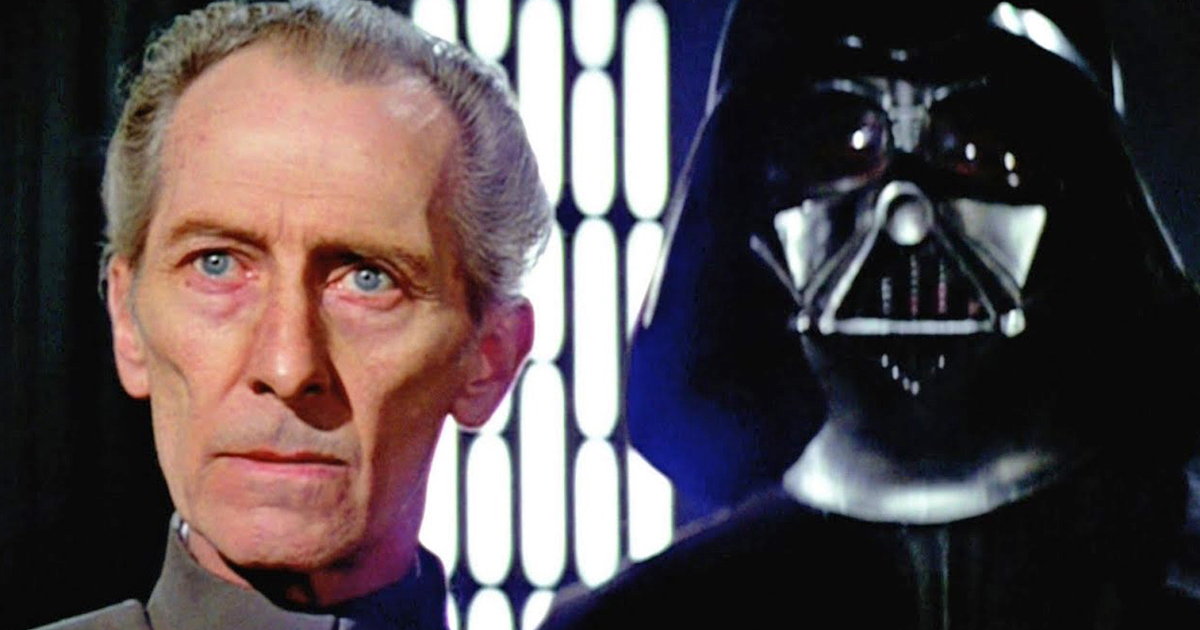
The film features a storyline so archetypally pure and universally appealing, you’d have to go back to 1939’s The Wizard of Oz for any comparisons. ‘A long time ago in a galaxy far, far away….’, Mark Hamill stars as Luke Skywalker, a restless farm boy whose dreams of interstellar adventure come true when he receives a message from the distressed Princess Leia (Carrie Fisher). Leia is the leader of an armed political rebellion against the tyrannical, galactic Empire, led by Grand Moff Tarkin (Hammer horror legend Peter Cushing) and his helmeted right-hand assassin, Darth Vader (David Prowse, voiced by James Earl Jones).
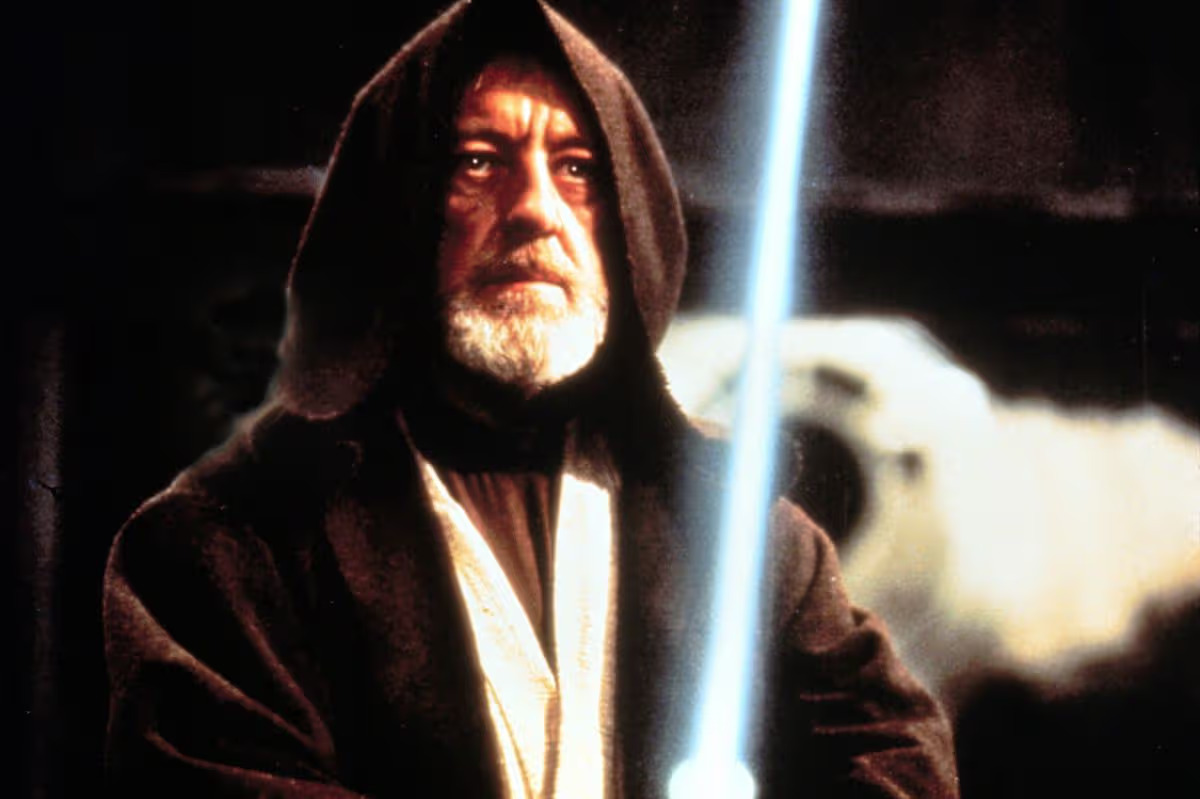
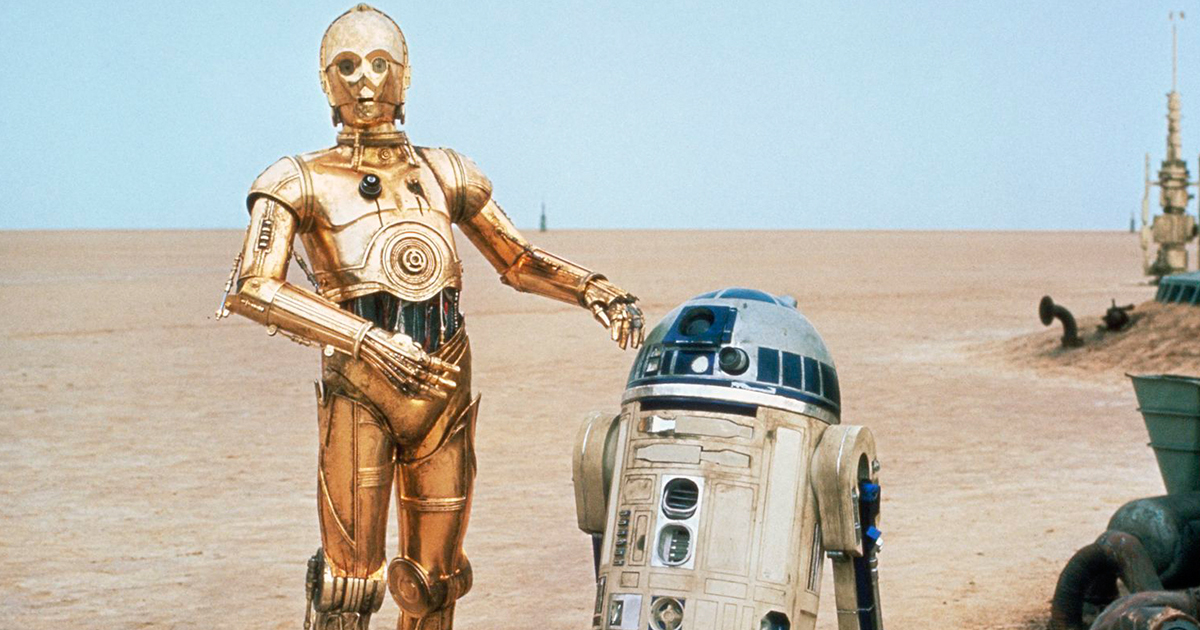
Luke heeds Leia’s call, seeking out an old hermit named Ben Kenobi (The Bridge on the River Kwai‘s Alec Guinness). Ben implores Luke to join him on a mission to rescue the princess and help the Rebellion find a way to destroy the Empire’s new planet-exploding space station called the Death Star. On their adventure, Luke and Ben are aided by two loyal robots named C-3PO (Anthony Daniels) and R2-D2 (Kenny Baker), a smuggler named Han Solo (Harrison Ford), and his tall, hairy Wookiee copilot, Chewbacca (Peter Mayhew). After the daring rescue of Princess Leia, these heroes prepare to launch an improbable attack on the Death Star before it destroys the Rebel Base and any other planets who dare defy the Empire.
In the writing of Star Wars, George Lucas steeped himself in the teachings of Joseph Campbell, a professor who committed his life to religious and mythological studies. Campbell eventually identified ‘the monomyth’, a boiled-down distillation of human experience in narrative form. Star Wars captures the essence of this universal monomyth, dressing it up in striking production, character, and creative design. Lucas also patterned Star Wars after old Hollywood serials — rapid-paced short films that ended in a cliffhanger ending every week. This inspiration is what makes Star Wars and its sequels among the most rewatchable films in cinema history. The story is told so quickly, that you can’t possibly catch every detail and nuance in just one viewing.
Even after dozens of viewings, Star Wars continues to reward viewers with its considerable artistry and visceral filmmaking techniques. Lucas caught lightning in a bottle when he cast Mark Hamill, Carrie Fisher, and Harrison Ford. Even though their dialogue is often unwieldy, the three young actors exude considerable charisma and chemistry that have endeared their characters to generation after generation. Hamill conveys infectious youth and yearning, while Ford offers a more world-weary counterweight. Fisher gives the film’s single-best performance, though. Princess Leia maintains her traditional femininity while also inspiring the new, ‘liberated woman’ of the ’70s, holding her own with the boys and blasting her way through bad guys when necessary. Fisher is both sweet, sassy, and indelible — a rare, ‘Hawksian’ sort of gal the boys can both love and look up to. The casting of veteran actors Guinness and Cushing lent the film credibility upon its initial release, with the added and enduring benefit of the fact that these men, like most British actors, are incapable of being unconvincing. Rounding out the brilliant casting is Anthony Daniels as the golden droid C-3PO, whose performance lies somewhere between a British butler and a used car salesman. His nervousness and eagerness to please make him surprisingly human, as does his tendency to take out all his frustrations on poor, lovable little R2-D2.
Lucas and his trio of Oscar-winning film editors (Marcia Lucas, Richard Chew, and Paul Hirsch) demonstrate a rare knack for conjuring thrills out of rapid juxtaposition of shots. Their efforts result in action that is more impressionistic than literal — again, the kind of thing you have to experience multiple times to fully digest. The visual effects from John Dykstra, Richard Edlund, and the pioneering folks at Industrial Light and Magic are nothing short of legendary. Prior to Star Wars, visual effects shots were mostly stationary, but Star Wars was the first film to implement computer-controlled, repeatable camera movements, which allowed visual effects shots to move around and contain multiple elements through optical compositing of multiple film layers. This was a game-changer, making it possible to achieve so many things that simply weren’t possible before 1977. It’s one of the reasons the science-fiction and fantasy genres dominated the 1980s — because they finally could.
Then there’s composer John Williams, who I dare say may be Lucas’s single-most significant collaborator on this film and all other Star Wars films. With a story that’s literally alien and with a pace that’s more frenetic than anything audiences had experienced before, it’s Williams’s old-fashioned symphonic score that dramatically and emotionally grounds Star Wars. The visuals may be out of this world, but the music is as human as ever, and it goes straight to our hearts. Williams captures the yearning of Luke Skywalker, the menace of the Empire, and the fortitude of Princess Leia in their respective themes and musical motifs. I can listen to the soundtrack to Star Wars — the music alone — and get exactly the same emotional experience that I get from watching the film with full visual accompaniment. Williams’ theme for ‘the Force’ gets me every time — both when Luke looks out in longing at the twin suns of Tatooine, and again when he hears Ben’s voice in his head during the climax. The melody starts off humbly, builds with confidence, peaks passionately, and then fades away with dignity. It has a progression like life and human endeavor, touching us on a psychological level even if we don’t recognize it doing so.
I’ll end my review with more about ‘the Force’, which essentially represents religious or spiritual faith in the Star Wars galaxy. Ben Kenobi calls it “an energy field created by all living things that surrounds and penetrates everyone, and binds the galaxy together.” If you study Joseph Campbell for a little while, you start to get the sneaking suspicion that all the world’s religions started in the same place, with the same messages, and many of the same stories. It’s only through time and human migration that the stories began to differ, causing people to argue and wage war over those growing variations in interpretation. ‘The Force’ is vague and undefined enough to welcome all faiths, anyone who wants to trust in a power or a guiding hand outside themselves. ‘The Force’ is alluring because it takes us back to a time before that splintering of religious belief. It reminds us of our commonality — our questions and convictions about life, death, and the beyond. ‘The Force’ distills religion in a simple but unifying way, much like the story of Star Wars’ distills the mythic Hero’s Journey. It adds another significant layer of fascination to this film.
While Star Wars is a film for all time, it’s also distinctly ‘the right film at the right time’. It came out after decades of box office stagnation and greater socio-political turmoil than America had experienced since World War II. Audiences were starving for a unifying, uplifting experience and Star Wars delivered just that. I can’t help but see parallels to today. Is it still possible for a movie to have as profound an impact as Star Wars? And if so, when is it coming, at what will it be?
Academy Awards: Best Art Direction, Best Music Score, Best Sound, Best Costume Design, Best Film Editing, Best Visual Effects, Special Achievement Award in Sound Effects (Ben Burtt)
Oscar Nominations: Best Picture, Best Director, Best Original Screenplay, Best Supporting Actor (Alec Guinness)
Note: This film has been retroactively titled Star Wars: Episode IV: A New Hope, but that just doesn’t roll off the tongue very easily. This review is of the original theatrical version of the film (commercially unavailable as of 2026 but reportedly returning to theaters in 2027), before any of the 1997 ‘special edition’ changes were made to it. If it ain’t broke, don’t fix it.