
[6]
For eight years in the 1940s, between Bambi (1942) and Cinderella (1950), Walt Disney Animation stopped making feature-length stories and focused on more budget-conscious ‘anthology features’ like Saludos Amigos and Fun and Fancy Free. Since anthologies are only as good as the sum of their parts, most of these are pretty uneven, lackluster films. Melody Time has the best betting average, with a better overall quality of story segments, including three strong, consecutive winners that close the movie.
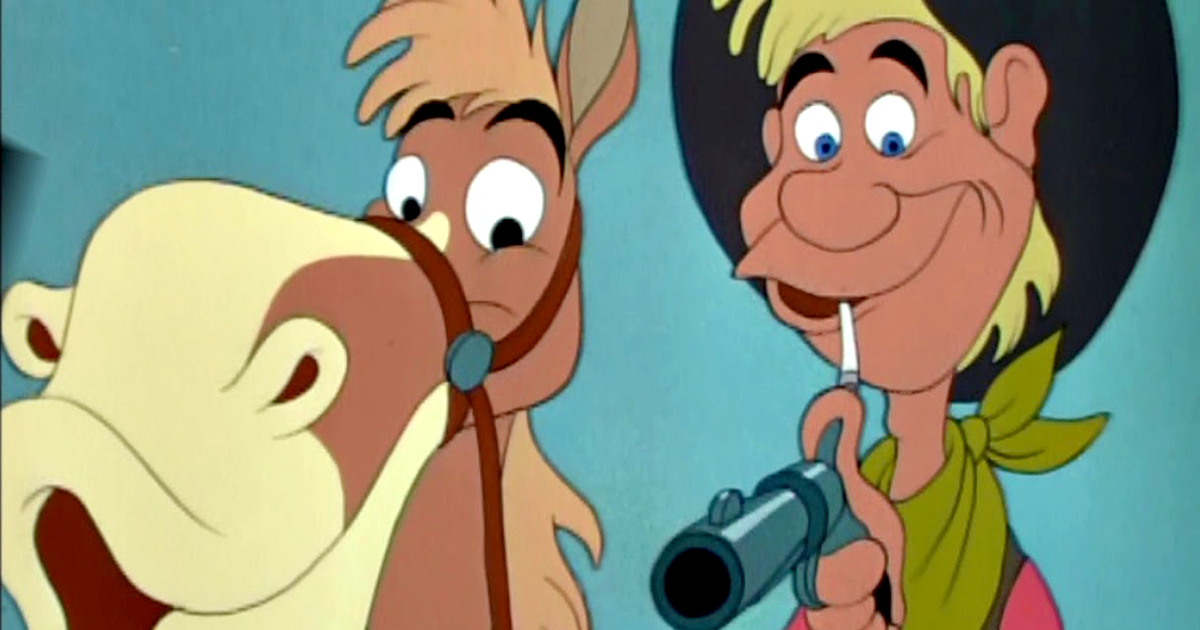
The film’s most mature and visually striking piece — the only one rivaling the quality of Fantasia — is called “Trees”, featuring the famous Alfred Joyce Kilmer poem accompanied by music from Fred Waring and the Pennsylvanians. It’s a simple but beautifully-made sequence depicting life in and around a certain tree as it weathers the changing of seasons. Following that, Melody Time shifts gears and takes us into more psychedelic territory as Donald Duck reteams with his parrot friend, Jose Carioca (The Three Caballeros), for “Blame it on the Samba”. This colorful, Latin-American flavored piece combines surreal animation with live-action footage of Ethel Smith playing an organ. The film then concludes with its most well-known chapter, “Pecos Bill”, in which Roy Rogers regales us with the tall tale of a baby boy abandoned on the great plains to be raised by coyotes. When he comes of age, he falls in love with the beautiful Slue-Foot Sue. His horse, Widowmaker, becomes jealous of Sue, however, leading to a tragi-comic finale that helps explain why coyotes howl at the moon.
Other segments include Dennis Day narrating the story of patriotic “Johnny Appleseed” and a small tugboat’s coming-of-age in the film’s cutest segment, “Little Toot”. Additional musical contributors include Frances Langford, the Andrews Sisters, the Dinning Sisters, and Freddy Martin’s orchestra performing a jazz-infused rendition of Rimsky-Korsakov’s Flight of the Bumblebee.