
[4]
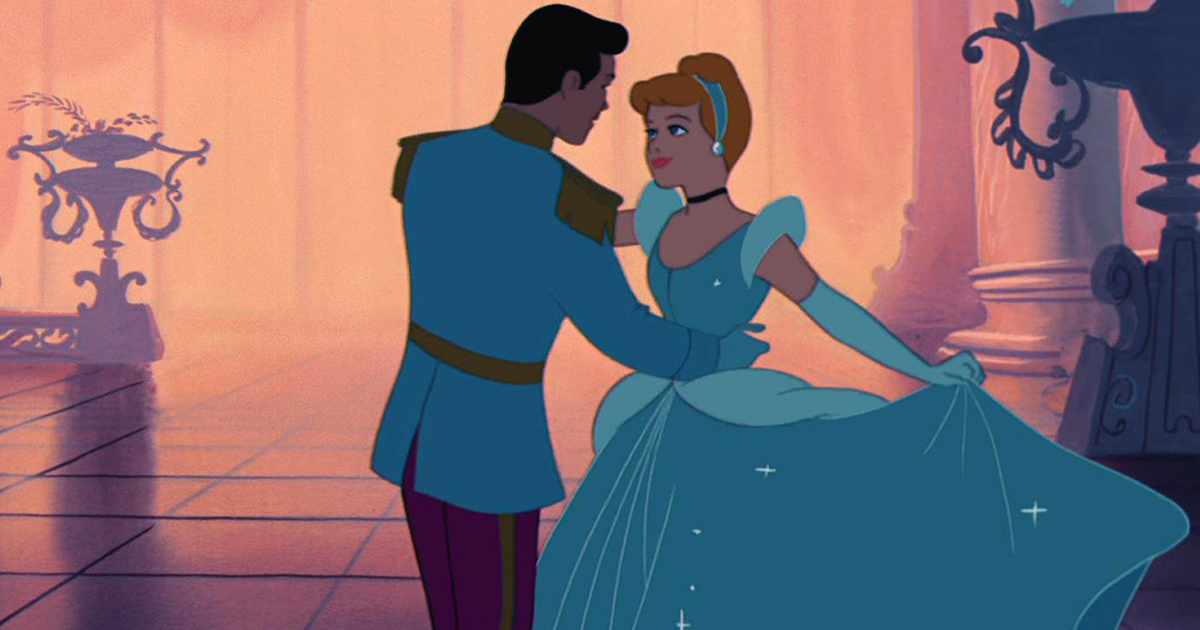
Cinderella was the biggest hit Walt Disney had since 1937’s Snow White and the Seven Dwarfs. Walt credited it for saving the company from bankruptcy. While I’m certainly thankful the film allowed Disney’s legacy to continue, I can’t say it’s among my favorites in the Disney canon. My problems are largely conceptual. I’m simply not a fan of a heroine who’s not strong or clever enough to punch her evil stepmother and evil step-sisters in the face, leave the house where she’s imprisoned, and get a job that pays. Worse still, this young woman does absolutely nothing to help herself. A magical fairy godmother gives her a dress and means to attend the royal ball, where a prince finds her attractive and decides to marry her outright. And Cinderella agrees to this marriage after just one dance? What a little floozie.
There are a few moments of beautiful animation, particularly during the “Bibbidi-Bobbidi-Boo” number, when the godmother turns a pumpkin into a carriage and transforms farm critters into horses and attendants. The royal castle is nicely rendered in impressionistic shades of blue and white. And the animators make select shots of the wicked stepmother nicely sinister. But the animation, on the whole, is more on the cheap and cartoonish end — not quite at the level of Disney’s pre-war efforts. And far too much screen-time is spent with Cinderella’s mice friends, who in many ways are the real stars of the movie. And why not? They’re certainly more proactive. I also find that the thin plotline is overly-protracted, mustering excitement only in the final ten minutes when the mice try to rescue Cinderella from her locked tower bedroom.
Directed by Clyde Geronimi, Wilfred Jackson, and Hamilton Luske. Featuring the voices of Ilene Woods as Cinderella, Eleanor Audley as the Wicked Stepmother, and Verna Felton as the Fairy Godmother. With James MacDonald, Lucille Bliss, and Rhoda Williams.
Oscar Nominations: Best Score, Song (“Bibbidi-Bobbidi-Boo”), Sound Recording