
[5]
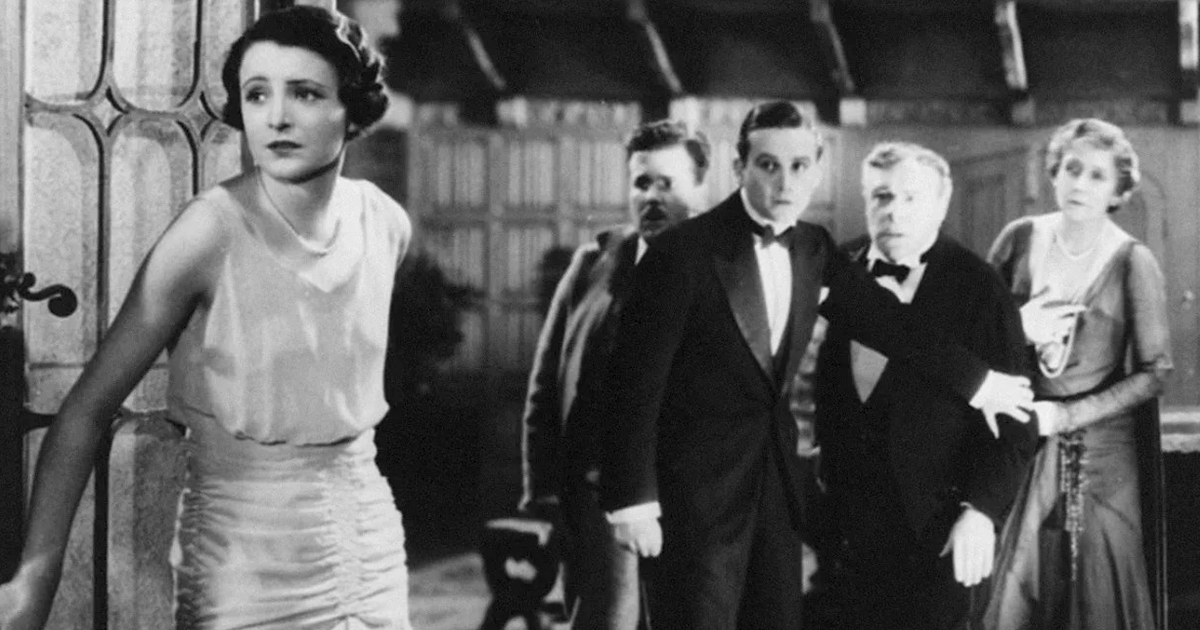
In this middling, early Alfred Hitchcock film, the aristocratic Hillcrist family battles with the industrialist Hornblower family over a plot of land in a small English village. The Hornblowers want to build a factory and erect unsightly smoke stacks, while the Hillcrists want to maintain their idyllic country setting. The bitter back-and-forth is waged primarily by Mr. Hornblower (Miracle on 34th Street‘s Edmund Gwenn) and Mrs. Hillcrist (Helen Haye), who resort to threats and blackmail without realizing the toll it’s taking on their families. The youngest Hornblower is in love with the youngest Hillcrist, but the family feud prevents them from consummating. Things are even worse for Hornblower’s daughter-in-law (Phyllis Konstam), whose secret, sordid past becomes a bargaining chip for the Hillcrists on the film’s way to a tragic ending.
The Skin Game suffers from early sound technology and is decidedly more message-driven than character-driven, but the ensemble cast is good all around. Gwenn is the standout as the blowhard patriarch of the Hornblower family. I also liked Phyllis Konstam as the distraught daughter-in-law, newly pregnant as her past threatens to ruin her marriage and the family’s name. While the film is far from the kind of thriller for which Hitchcock would soon become famous, it’s driven by a fair share of dramatic suspense. How far will these families go in their vengeful ‘skin game’, and who will bear the brunt of the collateral damage? The ending is telegraphed in advance, but I appreciate the story’s message that warfare — regardless of who starts it — only damages and degrades all who participate in it.
The film is based on a stage play and often feels that way, with many wide shots containing multiple players and long takes with little cutting. Hitchcock sprinkles cinematic elements judiciously but memorably. My favorite is a juxtaposition of shots involving a car gently pushing sheep out of a road, a perfect visual embodiment of the film’s central quarrel, one of traditional values versus modern progress. In another part of the film, Hitchcock is maybe a little too bold. When Konstam’s character first spots a man she knows could reveal her secret, the director superimposes the man’s face rushing toward the camera over and over again.
With C.V. France, Jill Esmond, John Longden, and Edward Chapman.