
[6]
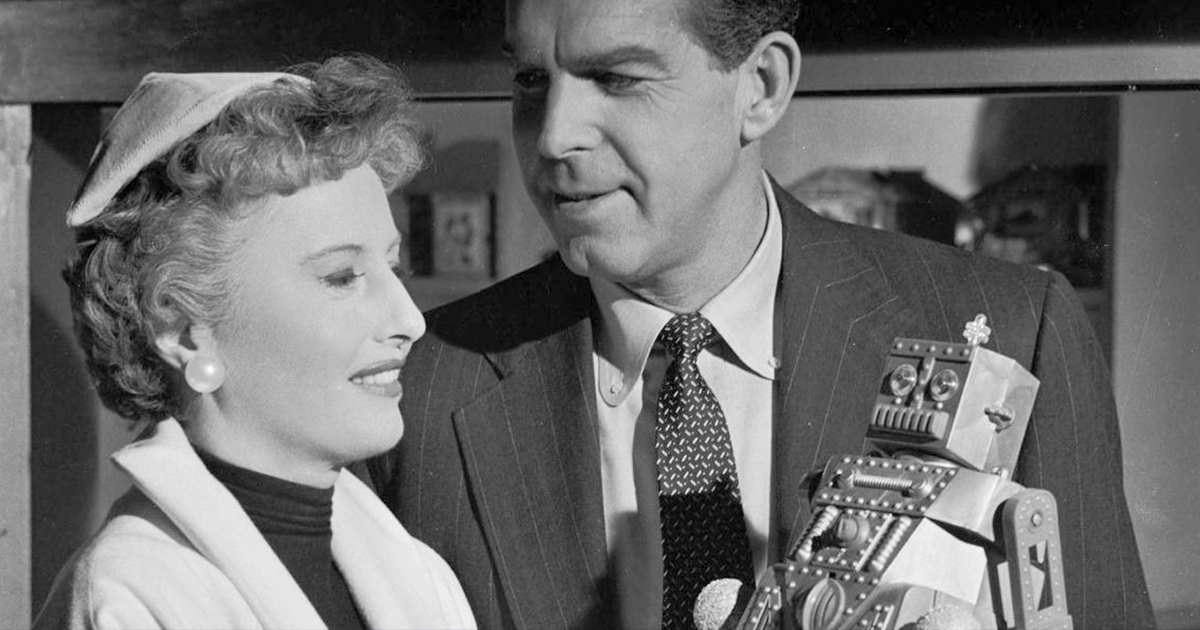
Director Douglas Sirk (Written on the Wind) mines male middle-aged malaise in this melodrama that reteams Barbara Stanwyck and Fred MacMurray (Double Indemnity) for their fourth and final film together. MacMurray plays a successful toy manufacturer with a wife and three children who all seem to take dear old dad for granted these days. When an old coworker shows up to check in on him, the spark of adulterous love ignites. MacMurray’s teenaged children (William Reynolds and Gigi Perreau) learn what’s going on while mom (Joan Bennett) remains in the dark. Will MacMurray throw away twenty years of marriage to rekindle the passions of youth, or will his children convince conflicted Stanwyck to leave town?
There’s Always Tomorrow is a pretty simple tale told in a straight-forward manner, but Stanwyck and MacMurray carry the film on their capable shoulders and it ends after just eighty minutes, before any dead horse can even be considered for beating. The bittersweet last twenty minutes successfully paint a portrait of the sacrifices married people make for their families. While the film is far less stylized than some of Sirk’s other work, there’s a wonderful shot near the end in which MacMurray accepts his dutiful fate. In the foreground, his latest toy invention — a walking robot — starts walking toward the camera accompanied by dramatic score, embodying the way all married men (especially in the 1950s) are expected to bury their hearts, keep walking, keep working, and keep providing for their families, regardless of whether they feel appreciated.
With Jane Darwell, Pat Crowley, Race Gentry, and a score than adopts the beautiful 1934 classic song ‘Blue Moon’ as its central theme.