
[7]
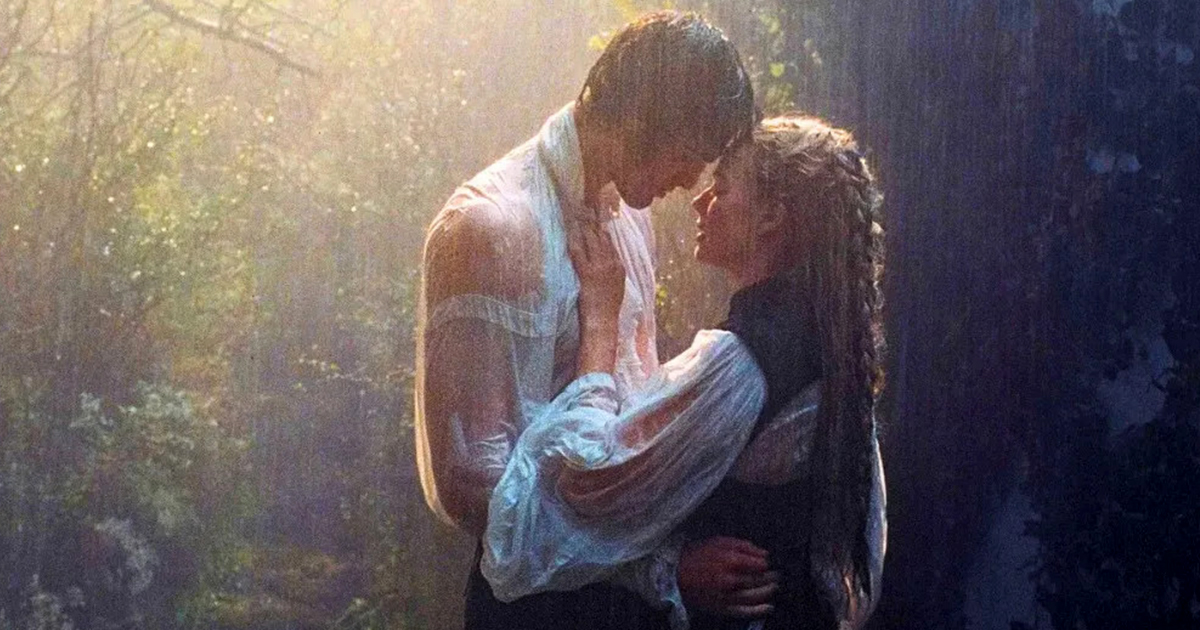
Die-hard fans of Emily Bronte’s classic gothic romance novel are bound to be befuddled or enraged by this loose, more sexually charged and stylistically modern adaptation of Wuthering Heights from Oscar-winning writer/director Emerald Fennell (Promising Young Woman, Saltburn). The film focuses on the first half of the novel, as a young girl named Catherine and an adopted orphan boy named Heathcliff grow up together on the Yorkshire moors. They develop an obsessive passion for each other, but their relationship is never consummated due to the nature of class division. Catherine marries someone else, and Heathcliff runs off. Years later, he returns a self-made man and takes a wife he does not love. Catherine and Heathcliff become taunting neighbors — torturing themselves, each other, and all those around them over their unrequited romance.
I’ve never liked Bronte’s novel (or the famous 1939 film version) because I hate Catherine and Heathcliff. They are, by design, evil, self-obsessed people who spread misery wherever they go. Since I’m not a fan of the source material, I was surprised to enjoy Fennell’s version. The more it strayed from Bronte, the more I liked it. There’s still enough of the book to hold the film back, but actors Margot Robbie (Barbie, I Tonya) and Jacob Elordi (Frankenstein, Saltburn) are able to humanize Catherine and Heathcliff more than I’ve seen before, mostly through remorse and regret as the story heads toward its tragic ending. (And, yes, Heathcliff is not white in the book. But since race and sex-swapping is all the rage these days, I’m not going to start criticizing it now.)
Emerald Fennell continues to be one of the more exciting directors working today, lending her now-trademark style to the film — putting a shiny, colorful, slightly avant-garde sheen over a gloomy, atmospheric setting. The anachronisms somehow work very well, perhaps because the whole production embraces a theatrical reality. She also brings the story’s romance into the 21st century in provocative ways. In the book, Catherine and Heathcliff never have sex and only kiss on one occasion. Here they drive each other into sexual frenzies, fuck several times, and dabble in BDSM. In one of the more controversial changes Fennell makes, Heathcliff’s wife Isabella (Alison Oliver), a sympathetic and long-suffering character in the novel, is made to bark on all fours in a chain leash, actually enjoying her abuse.
I don’t believe film adaptations should always be faithful to their source material. If you want faithful, read the original. A film version can only ever be an interpretation. Since we’ve seen several interpretations of Wuthering Heights by this point, I admire Emerald Fennell for being bold and even destructive with the material. Even though I still dislike Catherine and Heathcliff immensely, this is the most interesting Wuthering Heights has ever been.
With Hong Chau, Shazad Latif, Martin Clunes, and a bold, experimental score by Anthony Willis that highlights abrasive string work with synthesizers and vocal performances by Charli XCX.