
[7]
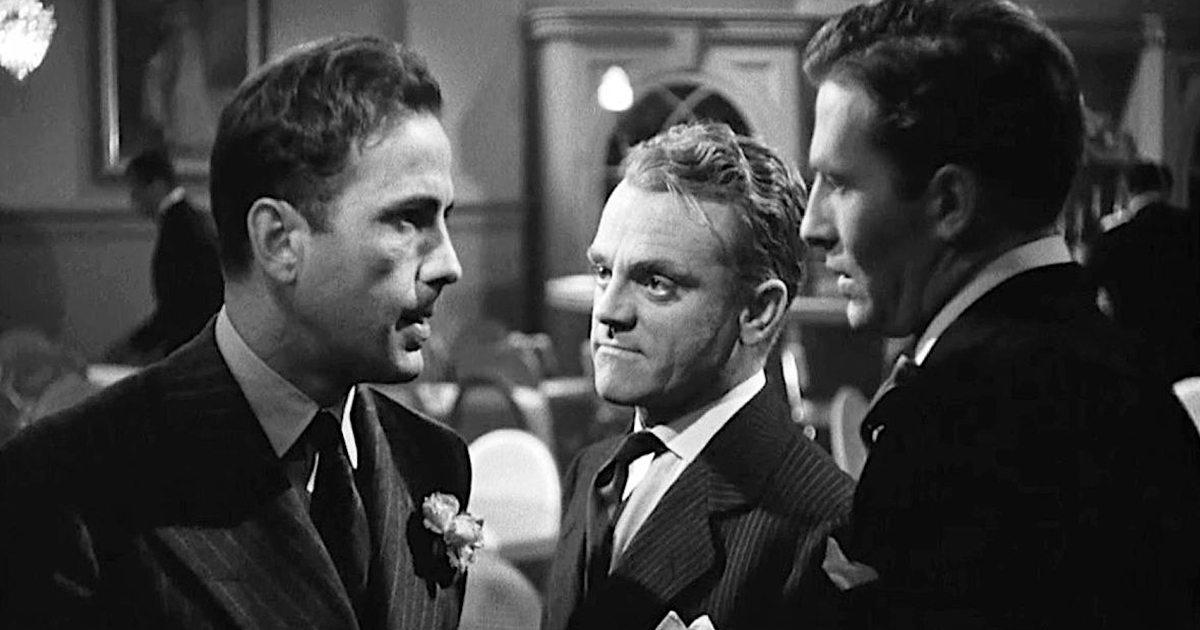
In this quintessential ’30s gangster flick, James Cagney stars as a World War I vet who has a hard time finding a job when he returns home to New York City. He resorts to transporting liquor to speak-easies during Prohibition, which proves both dangerous and lucrative. He maintains friendships with two war buddies played by Humphrey Bogart and Jeffrey Lynn as their business grows. But their loyalties begin to fray when Bogart sees an opportunity to enrich himself at the expense of the others, and Lynn becomes a district attorney. Bogey’s business thrives when Prohibition ends, while Cagney’s craters. Cagney is knocked down even harder when his singer girlfriend (Priscilla Lane) chooses to marry Lynn instead of him. Cagney gets a last chance at redemption when he learns Bogey is threatening to kill Lynn if he doesn’t turn a blind eye to his shady dealings.
Cagney gives a great leading performance here, reveling in the character’s highs and doing his best to maintain a stiff upper lip during his tragic downfall. Bogart is just as good as the chum-turned-villain. We get an inkling of where his character arc is going when the men are fighting in the war trenches at the beginning. When Jeffrey Lynn can’t bring himself to shoot a German soldier because he looks like a fifteen-year-old, Bogey aims and fires, then adds, “He won’t be sixteen.” Lane and Lynn are serviceable, but the film finds a third terrific performance in Gladys George as Panama Smith, the mistress of ceremonies at the speak-easy nightclub. She carries a flame for Cagney, who never reciprocates — even when she’s the only one there for him at the bitter end.
The Roaring Twenties moves well, balancing action, romance, and even a few song numbers, including Lane’s renditions of “I’m Just Wild About Harry” and “It Had to Be You”. A third dreary number, “My Melancholy Baby”, probably should have been left on the cutting room floor. The film is frequently interrupted by a narrator who catches us up on social and political changes year by year. It’s educational, even if it’s a clunky means of doling out exposition. Bogey and Lynn could have used more screen time together to better set up their ultimate conflict with one another, and it would have been nice if Gladys George’s wonderful character were explored a bit more, too. But The Roaring Twenties is a good gangster movie with enough well-drawn character drama to appeal to mainstream audiences. If you enjoyed Martin Scorsese’s ‘rise and fall’ films Casino and Goodfellas, you might recognize their narrative patterns and rhythms at work in this film.
Directed by Raoul Walsh (Objective Burma!, High Sierra). With Frank McHugh and Paul Kelly.