
[7]
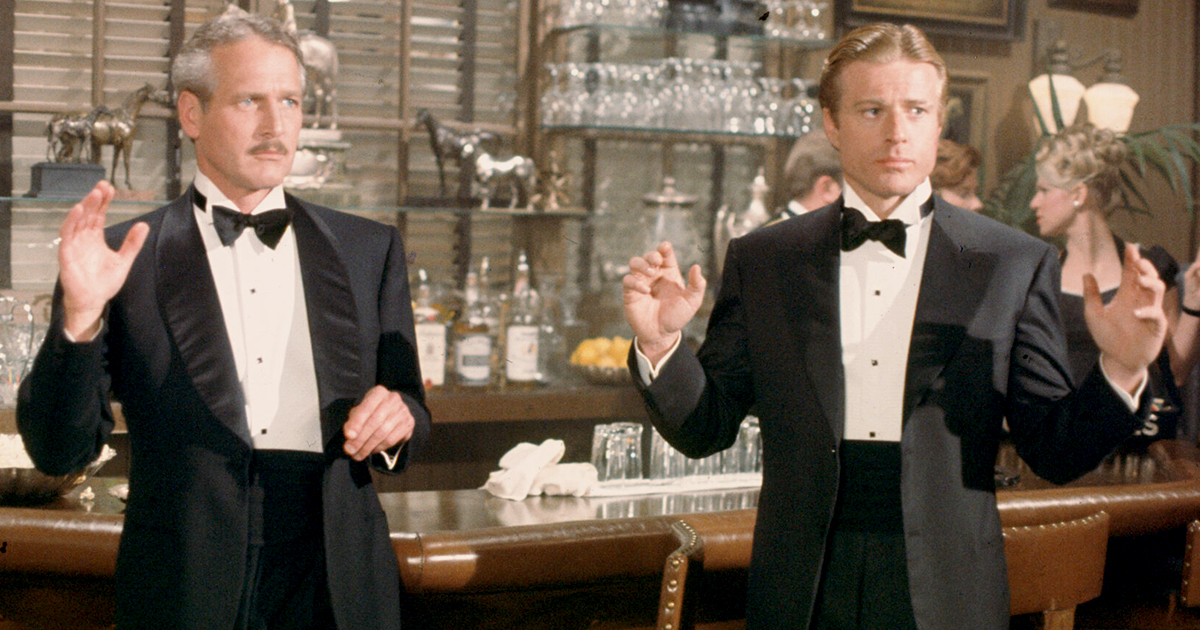
Robert Redford and Paul Newman play Chicago con artists who team up to bankrupt a crime boss (Robert Shaw) who authorized the killing of Redford’s grifting partner. Several other con artists join in on the elaborate betting scheme, which is threatened not only by Shaw and his goons, but by a pursuing detective (Charles Durning) and other mysterious third parties. Things get especially complicated when the feds get involved, forcing Redford to help them capture Newman.
The Sting has an intricate, engaging plot, stellar period production and costume design, and an all-around terrific cast. The film really takes off once Redford meets Newman. Unfortunately, the two stars have very little quality screen time together. As lauded as this film is, I can’t help but feel it could have been so much better if it leaned a bit more on character than plot, at least enough to give Redford and Newman’s relationship more banter and development. Likewise, Robert Shaw is good as the film’s villain — but it’s a somewhat restrained performance. How much more fun could it have been if Shaw let his hair down and cut loose a bit more? (Anyone whose seen Jaws knows he’s more than capable.)
Even though I don’t feel the film reaches its full potential and was over-praised by the Academy, it’s still a solid flick. As plot-heavy scripts go, this is perhaps one of the best, with plenty of twists and reversals to keep things fresh and lively to the end. Newman gets the best acting opportunity when he pretends to be drunk at a high stakes card game against Shaw. The supporting cast features well loved character actors like Eileen Brennan (Clue, Private Benjamin), Ray Walston (Fast Times at Ridgemont High, Popeye), and Harold Gould (The Golden Girls).
Directed by George Roy Hill (Slap Shot, Butch Cassidy and the Sundance Kid). With Dana Elcar, Jack Kehoe, Dimitra Arliss, Robert Earl Jones (father of James Earl Jones), and Sally Kirkland.
Academy Awards: Best Picture, Director (George Roy Hill), Original Screenplay (David S. Ward), Art Direction, Costume Design (Edith Head), Film Editing (William Reynolds), Score (Marvin Hamlisch)
Oscar Nominations: Best Actor (Robert Redford), Cinematography (Robert Surtees), Sound