The Hunchback of Notre Dame (1939)
[6]
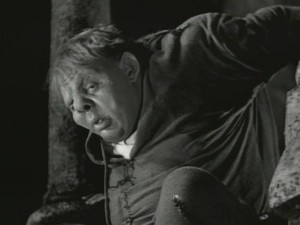
Charles Laughton’s performance as Quasimodo is the main reason to see this movie. Laughton gives the deformed bell ringer moments of quiet torment as well as unbridled joy, and without ever going over the top – a remarkable feat that should have earned him an Oscar nomination. I also liked Cedric Hardwicke as the malevolent Frollo and Maureen O’Hara (in her screen debut) as Esmerelda, but several of the other cast members act as though they are playing cartoon characters (Harry Davenport is the worst offender). The film could have benefited from a more genuine period setting and a more earnest supporting cast. Director William Dieterle bestows the film with some elegance, though it’s not nearly as polished as his later work on The Devil and Daniel Webster.
Closer (2004)
Django (1966)
Victim (2010)
Swing Time (1936)
[6]
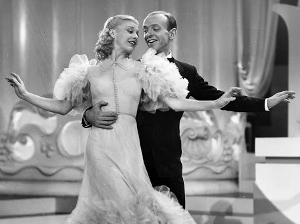
Fred Astaire and Ginger Rogers, filmdom’s undisputed dancing duo, are at their apex in Swing Time, directed by George Stevens (is there any genre that man didn’t tackle?) I’m not a fan of old song and dance flicks, but Swing Time is cute enough. The dancing sections are consistently entertaining and technically innovative. My favorite number is one where Astaire dances with three shadows of himself. They’re in synch for a while, and then start competing with each other. Unfortunately, Fred’s in black face for the whole number, but you’ll have that in films from the 30s and 40s.
The Verdict (1982)
Scott Pilgrim vs The World (2010)
[5]
This ultra-gitchy flick is probably unlike anything you’ve ever seen before, and that’s normally cause for celebration. But if you’re not into playing video games (like me), the film’s rapid pacing and excessively kinetic style may just leave you plain bewildered. On the other hand, the narrative is so simple that without the quick rhythm and psychedelic interludes, the film wouldn’t be very interesting. Director Edgar Wright is consistently clever and inventive in his execution, and does a spectacular job keeping you interested throughout a plot line that could easily have been a snooze.
Wise Blood (1979)
[6]
John Huston tackles Flannery O’Connor’s gothic tale of southern evangelism. Wise Blood is a curious movie full of interesting ideas, not the least of which is a paradoxical main character who shuns Jesus while simultaneously torturing himself for some sort of redemption. Brad Dourif (One Flew Over the Cuckoo’s Nest, Child’s Play) stars as the son of a ‘hellfire and brimstone’ preacher (Huston in flashbacks) who moves to a new city and tries to start up his own church, “The Church Without Jesus.” Preaching on street corners, he easily wins the undying allegiance of a simpleton played by Dan Shor (Tron, Bill and Ted) and makes enemies with rival street preachers (Harry Dean Stanton and Ned Beatty) who only seek to swindle a dollar from faithful onlookers.