To Kill a Mockingbird (1962)
[10]
Harper Lee’s Pulitzer Prize-winning novel is lovingly adapted to film by director Robert Mulligan, screenwriter Horton Foote, and producer Alan J. Pakula. Gregory Peck earned the Best Actor Oscar for his portrayal of Atticus Finch, a lawyer of uncompromising morals who puts the safety of his family on the line to defend Tom Robinson (Brock Peters), a black man accused of raping a white woman. Finch is also a widower, raising his two young children with the help of his maid Calpurnia (Estelle Evans). The narrative is made a coming-of-age story through the eyes of Finch’s youngest, the feisty Jean Louise — or Scout (Mary Badham) as she’s nicknamed. Scout’s perspective on racism is balanced with her own fear and ignorance surrounding a neighbor named Boo Radley (Robert Duvall), who turns out to be her salvation when she and her brother are attacked by a bigot seeking revenge on their father.
What Ever Happened to Baby Jane? (1962)
Rio Bravo (1959)
Auntie Mame (1958)
The Incredible Shrinking Man (1957)
[10]
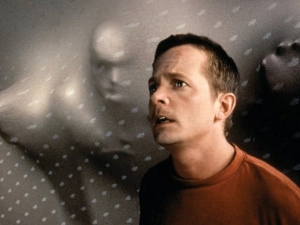
This terrifying tale of emasculation is my favorite sci-fi/horror flick from the atomic age. Grant Williams stars as Scott Carey, a man who gets caught in a strange mist while boating with his wife. Afterwards, he notices his clothes don’t fit quite like they used to. His wife assures him everything is fine, that he just needs to eat more. A few days later, she finds she no longer has to get on her tip-toes to kiss him, and before you know it, his wedding ring falls right off his shrinking finger.
The Bridge on the River Kwai (1957)
[8]
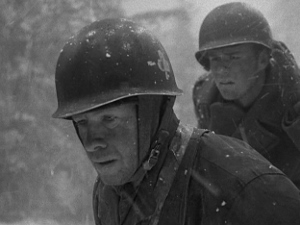
A British colonel (Alec Guinness) leads his fellow POWs in constructing a bridge for their Japanese captors, unaware of the fact that allied forces, guided by a reluctant American (William Holden), have launched a covert mission to destroy it. David Lean’s film zips along remarkably well considering it’s nearly-three-hour running time. The film benefits from its exotic locale, Oscar-winning cinematography, and distinguished performances.
Friendly Persuasion (1956)
[9]
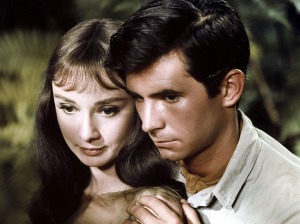
William Wyler directs this story about an Indiana Quaker family trying hard to keep their pacifist faith while the Civil War creeps up on their doorstep. The screenplay makes the period setting completely accessible, skillfully blending comedy and drama with character and substance. I quickly invested in the family, especially Gary Cooper as the father, a man who enjoys horse racing his neighbor to church on Sunday mornings. Dorothy McGuire is beautiful and endearing as his stalwart wife, and Anthony Perkins makes a memorable turn as their oldest son.
The Night of the Hunter (1955)
[10]
Two small children run for their lives from a murderous preacher in the only film actor Charles Laughton ever directed. The Night of the Hunter is a unique blend — part fable and part thriller, both pastoral and horrific, a beguiling mixture of qualities that usually mark the work of an amateur… or a genius. Laughton is as precise and purposeful as Orson Wells (even using Well’s cinematographer from The Magnificent Ambersons), but there’s also a naive, experimental quality to the film, in the way he mixes realism with German expressionism, and solemnity with odd moments of Tex Avery-style comedy.
Seven Brides for Seven Brothers (1954)
[9]
It could just be my hillbilly roots, but I get a kick out of this corny but highly entertaining romp from the director of Singin’ in the Rain. A kind-hearted woman (Jane Powell) impulsively marries a mountain man (the booming Howard Keel) but gets more than she bargained for when he introduces his six brothers in the squalor of their remote farm house. Powell is the heart of the movie. Making the best of it, she tries to civilize Keel’s six lonely brothers to improve their chances of finding their own brides.