Halloween II (2009)
[2]
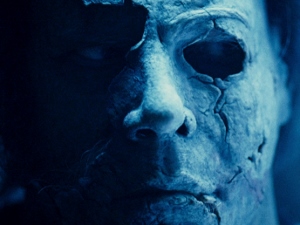
When Rob Zombie re-booted Halloween in 2007, trading Michael Myers’ boogeyman mystique for a more pointed psychological explanation for his behavior, I didn’t hate it. While I much prefer not to see the man behind the mask or to understand his motivations, I thought Zombie’s remake was a somewhat interesting experiment. But his version of Halloween II is a whole different and far worse endeavor.
You’re Next (2011)
[6]
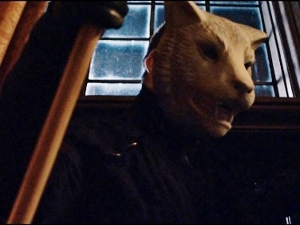
In this home invasion horror flick from writer Simon Barrett and director Adam Wingard (V/H/S), a group of animal-masked killers armed with crossbows and axes begin preying on a wealthy family coming together for the parents’ anniversary. The film spends a generous twenty minutes or so getting you acquainted with the family — including three sons, a daughter, and everyone’s significant others. But then the shit hits the fan, and it pretty much keeps hitting it for over an hour. You’re Next isn’t a drastic departure from formula, but it has a few surprises in store. If it took itself too seriously, it’d be easier to write it off as just another home invasion movie. But with its tongue-in-cheek humor and increasingly hyper-stylized execution (no pun intended), it reminds me of a good old-fashioned ’80s slasher/revenge movie. Is it derivative or classic? You decide — but nostalgia goes a long way with me.
Stranger by the Lake (2013)
The Number 23 (2007)
[6]
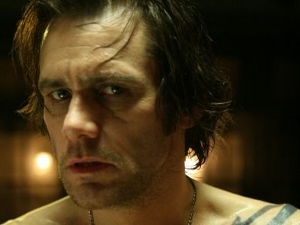
Jim Carrey stars as a man who discovers a book that he believes is about him, sinking him further and further into a murder mystery that proposes the killer is, quite literally, the number 23. Carrey is good and director Joel Schumacher’s (A Time to Kill, Flatliners) direction is taut, if a little too hyper-stylized for the material. I don’t put stock in numerology, so the first half of the film strains my suspension of disbelief. Fortunately, Fernley Phillips’ script makes a one-eighty after the mid-point and I found the last half much more engaging than the first. (I won’t give any direct spoilers, but it’s a lot like A Beautiful Mind in its narrative structure.) Cinematographer Matthew Libatique (Requiem for a Dream, Black Swan) serves up high-contrast lighting and a palette of deep colors to reinforce Schumacher’s melancholy tone, while Harry Gregson-Williams’ score plays counterpoint, adding a sense of wonder and urgency.
Starship Troopers (1997)
[8]
Director Paul Verhoeven (RoboCop, Basic Instinct) continues his knack for combining violence, gore, dark humor and social commentary in this loose adaptation of Robert A. Heinlein’s serialized novel about humankind’s future war against a race of insect-like aliens. I can almost enjoy the movie for the action alone. It escalates beautifully, with plenty of exciting sequences and spectacular visual effects. But it’s the satirical edge that helps distinguish Starship Troopers. The whole movie is designed as a recruitment film for a fascist society. When our ‘heroes’ win in the end, the movie has its tongue firmly in cheek, dressing them as full-blown Nazis while Leni Riefenstahl-like propaganda leads us into the closing credits.
Rocky Balboa (2006)
[6]
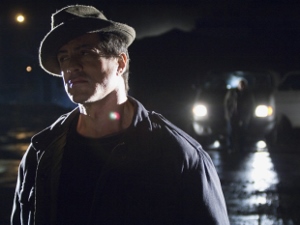
The sixth entry in the Rocky franchise is far better than it has any right to be. Sylvester Stallone is back in the writing and directing chairs, presenting a melancholy portrait of a hero fighting against decline. At the film’s start, we see the Italian Stallion still reeling from the death of his beloved Adrian two years prior, while trying to maintain a relationship with his estranged son (Milo Ventimiglia). While Rocky tries to break his lonely spell by making friends with a single mother (Geraldine Hughes) and her son (James Francis Kelly III), a TV sports show tries to create a fantasy boxing match between the current heavyweight champion, Mason Dixon (Antonio Tarver) and a past legend, our man Rocky. The idea catches fire, pulling Balboa back into the ring after years of retirement.
Jocks (1986)
Permanent Midnight (1998)
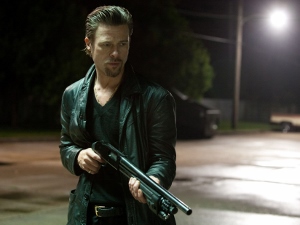
Killing Them Softly (2012)
[6]
Brad Pitt reunites with writer/director Andrew Dominik (The Assassination of Jesse James by the Coward Robert Ford), playing a hit man called in by the local crime lords after two young kids take down a big card game that collapses the underground economy. The parallels to the US economy are blatant, complete with recurring clips of Barack Obama and George W. Bush talking about the financial collapse of 2008. But if you ignore the pointed comparison, Killing Them Softly offers a compelling portrait of characters who do anything to get by. They aren’t quite the tough guys of so many other mob and gangster movies — Dominik’s character’s don’t enjoy hurting people, they just want to get paid — and they fear the consequences of their actions. It’s a refreshing spin on familiar ‘tough guy’ tropes, but don’t expect a Scorsese or Tarantino movie here. This one favors conversation and performance well over action. There are a couple of visceral moments in the film (both involving the brutal misfortunes of Ray Liotta’s character), but the real reason to see Killing Them Softly is for the performances.