Aliens (1986)
[10]
James Cameron accomplishes a rare feat with a sequel that doesn’t shame the original and succeeds on its own merits. Aliens is so different in tone than the original Alien, I think of it as a sequel only in name (this goes for all the Alien movies). In a smart move, Cameron decided not to compete with Ridley Scott in the areas of horror and suspense. Aliens is decidedly a combat movie.
Back to the Future (1985)
Amadeus (1984)
[10]
Straight biographies rarely make great film, but by filtering the subject through another man’s envy, director Milos Forman (One Flew Over the Cuckoo’s Nest) delivers one of the best bio-films I’ve ever seen. This isn’t a film about a composer and his music (how boring would that be?) — it’s a film about an insanely jealous contemporary named Salieri. Salieri, played brilliantly by F. Murray Abraham, turns Mozart’s life and accomplishments into his own personal battle with God. Just watch Abraham pretend to be Mozart’s best friend, all while plotting to destroy him, and you quickly appreciate why the man won an Oscar for his performance.
Return of the Jedi (1983)
E.T. The Extra-Terrestrial (1982)
An American Werewolf in London (1981)
Raiders of the Lost Ark (1981)
[10]
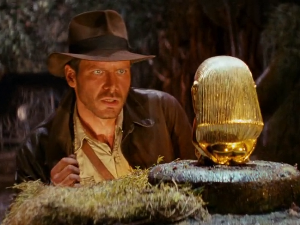
Steven Spielberg wanted to make a James Bond movie until his buddy George Lucas said, ‘I have a better idea.’ And he did. Lucas created Indiana Jones, a globe-trotting archaeologist who sought treasure for fortune and glory while encountering a variety of adversaries in his travels, starting with the Nazis in Raiders of the Lost Ark. Indiana Jones would become the new name of film adventure in the 1980s, paying homage to the cliffhanger serials of yesteryear while simultaneously elevating them with a bigger budget and more attention to craft and character. Lawrence Kasdan’s screenplay for Raiders of the Lost Ark is a well-oiled machine that never falters or skips a beat, balancing the thrills with a healthy dose of humor and the spectacle with likeable characters with whom you’re more than happy to go the distance.
Ordinary People (1980)
[10]
Robert Redford directs this adaptation of Judith Guest’s novel, about a family reeling from the accidental death of the eldest child. Unlike so many dramas, it’s what you don’t see and what isn’t said that makes Ordinary People such a gut-wrenching, powerfully moving film.
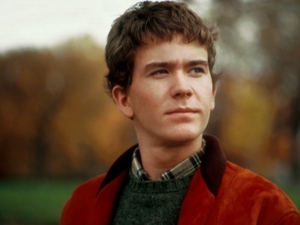
Timothy Hutton, Donald Sutherland, and Mary Tyler Moore give superb performances as family members struggling to reconnect with one another after the tragedy. Hutton won the Best Supporting Actor Oscar for his raw, riveting portrayal of young Conrad Jarrett. Moore plays his mother, an emotionally unavailable woman barricading herself from further distress by ignoring her family’s problems, even after Conrad tries to take his own life. Sutherland plays the father, the mediator between mother and son, desperately trying to hold his family together. Judd Hirsch appears as Conrad’s therapist, a savior shrink who forces Conrad to confront his guilt and fear.Â