The Last Picture Show (1971)

The Last Picture Show (1971)

[10] Peter Bogdanovich adapts Larry McMurtry's nostalgic coming-of-age tale, creating a film so believably rooted in a lonely time and place (the early '50s Texas dust bowl), that you have a hard time shaking it when it's over. The film…
The Lion in Winter (1968)

The Lion in Winter (1968)

[10] Which of King Henry II's sons will succeed him on the throne? This question is rife with political intrigue, personal vendettas, and intense family drama in The Lion in Winter. The relationships are fascinating to watch unfold. The three…
Bonnie and Clyde (1967)

Bonnie and Clyde (1967)

[9]

Warren Beatty and Faye Dunaway star as the legendary real-life bank robbers in Arthur Penn’s volatile Bonnie and Clyde. With its anti-hero point of view and graphic violence, this film helped lead the charge for grittier, more realistic fare that cropped up throughout the ’70s. While the film certainly sensationalizes the criminals, it also humanizes them. It’s easy to see how a bored waitress like Bonnie Parker would fall for a handsome bad boy like Clyde Barrow (I mean, who wouldn’t get in a car with smoking-hot Warren Beatty?) And since the two only robbed banks, they became folk heroes to a working class destroyed by foreclosures. I also like that the film suggests Clyde is impotent. It’s refreshing to see a tough guy with flaws and foibles, and it also makes the romantic relationship more interesting than most.

To Kill a Mockingbird (1962)

To Kill a Mockingbird (1962)

[10]

Harper Lee’s Pulitzer Prize-winning novel is lovingly adapted to film by director Robert Mulligan, screenwriter Horton Foote, and producer Alan J. Pakula. Gregory Peck earned the Best Actor Oscar for his portrayal of Atticus Finch, a lawyer of uncompromising morals who puts the safety of his family on the line to defend Tom Robinson (Brock Peters), a black man accused of raping a white woman. Finch is also a widower, raising his two young children with the help of his maid Calpurnia (Estelle Evans). The narrative is made a coming-of-age story through the eyes of Finch’s youngest, the feisty Jean Louise — or Scout (Mary Badham) as she’s nicknamed. Scout’s perspective on racism is balanced with her own fear and ignorance surrounding a neighbor named Boo Radley (Robert Duvall), who turns out to be her salvation when she and her brother are attacked by a bigot seeking revenge on their father.

The Bridge on the River Kwai (1957)

The Bridge on the River Kwai (1957)

[8]

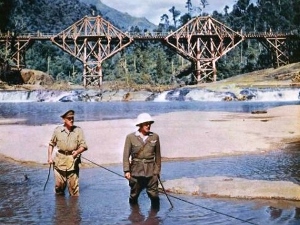
A British colonel (Alec Guinness) leads his fellow POWs in constructing a bridge for their Japanese captors, unaware of the fact that allied forces, guided by a reluctant American (William Holden), have launched a covert mission to destroy it. David Lean’s film zips along remarkably well considering it’s nearly-three-hour running time. The film benefits from its exotic locale, Oscar-winning cinematography, and distinguished performances.
Seven Brides for Seven Brothers (1954)

Seven Brides for Seven Brothers (1954)

[9]

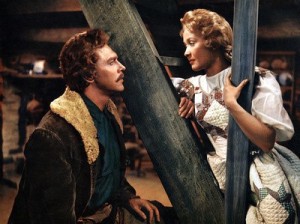
It could just be my hillbilly roots, but I get a kick out of this corny but highly entertaining romp from the director of Singin’ in the Rain. A kind-hearted woman (Jane Powell) impulsively marries a mountain man (the booming Howard Keel) but gets more than she bargained for when he introduces his six brothers in the squalor of their remote farm house. Powell is the heart of the movie. Making the best of it, she tries to civilize Keel’s six lonely brothers to improve their chances of finding their own brides.

The African Queen (1951)

The African Queen (1951)

[9]

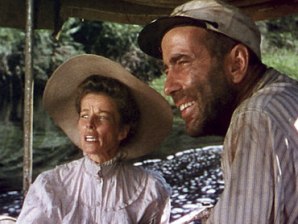
Charm can take a movie a long, long way. With Katharine Hepburn and Humphrey Bogart in their only film together, The African Queen goes the distance. She’s Rosie, the prudish widow of a missionary, and he’s Charlie, the rough-around-the-edges steamboat captain. Director John Huston puts them in a small boat together and lets the sparks fly. We need only a simple plot to drive this movie forward — Charlie and Rosie are determined to sink a German gunship that blocks the mouth of the river, so they make their own torpedoes and head straight into danger. The story gives ample room for the characters to quarrel and, yes, fall in love.

The Treasure of the Sierra Madre (1948)

The Treasure of the Sierra Madre (1948)

[9]

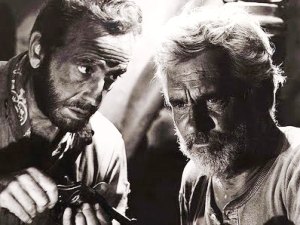
Three desperate men scrape together everything they can muster to go prospecting for gold and discover not just riches, but the destructive greed that comes with them. This is one of John Huston’s finest works, a male bonding adventure that doubles as a dark morality tale. Humphrey Bogart is terrific in the leading role, especially when his character begins turning into the monster of the piece. Outside of film noir, you rarely see protagonists like Bogart’s go evil without the film losing favor with the audience. Maybe we still feel a little sympathy for him because we see his dark potential in ourselves?

Mrs. Miniver (1942)

Mrs. Miniver (1942)

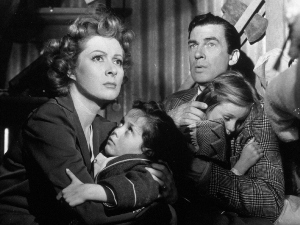
[10] William Wyler's portrait of an English family weathering the darkest hours of World War II is a moving drama about hope and persistence. There's a quiet strength and noble resolve about the characters in this movie that I find…
The Devil and Daniel Webster (1941)

The Devil and Daniel Webster (1941)

[10]

William Dieterle’s adaptation of Stephen Vincent Benet’s The Devil and Daniel Webster is a winning combination of rustic Americana and dark fantasy. A cautionary tale of greed and power, the narrative centers around the character of Jabez Stone (James Craig), a down-on-his-luck farmer who is barely able to support his family in 1840s New Hampshire. When the nefarious Mr. Scratch (Walter Houston) appears during a moment of weakness, Jabez agrees to sell his soul in exchange for seven years of good luck.  Much to the dismay of his wife (Anne Shirley), mother (Jane Darwell), and beloved politician Daniel Webster (Edward Arnold), Jabez slips into a downward spiral as a result of his newfound wealth and power.  When his seven years are up, Jabez learns the error of his ways and wants to make amends. To escape his contract with the Devil, Jabez puts his fate in the hands of the almost mythic Daniel Webster, who represents him in a climactic barn room trial against Mr. Scratch and a jury of the damned. Â